

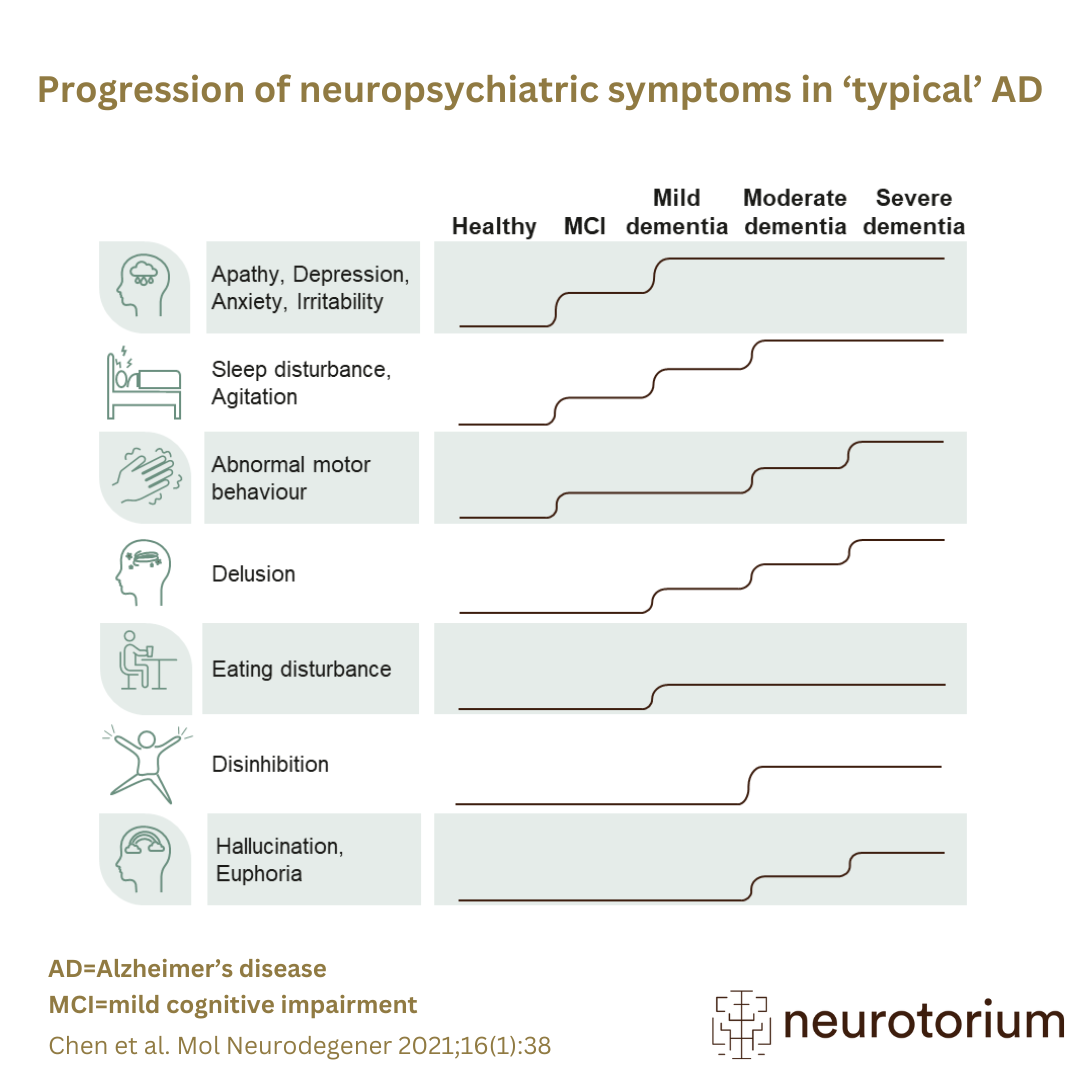
The symptoms of AD can be generally divided into three categories – cognitive, functional, and neuropsychiatric. The main areas of cognition that can be impaired during AD include memory, language, attention and executive functions, and visuospatial skills.
A decline in everyday function is also a predominant feature of AD, the effects of which become more disabling as the disease progresses. The ability to perform activities of daily living deteriorates with advancing disease severity.
Neuropsychiatric and behavioural symptoms of AD include depression/dysphoria, apathy/indifference, elation/euphoria, anxiety, irritability, agitation/aggression, aberrant motor behaviour, disinhibition, delusions, hallucinations, sleep disturbances, and appetite/eating disturbances.
Read more about The symptoms throughout the Alzheimer’s disease
Related content


Brain drug delivery systems, allied with their characteristics for overcoming the blood-brain barrier (BBB).

The use of a single treatment in heterogeneous populations has proved problematic in clinical trials undertaken in patients with neurodegenerative diseases.