
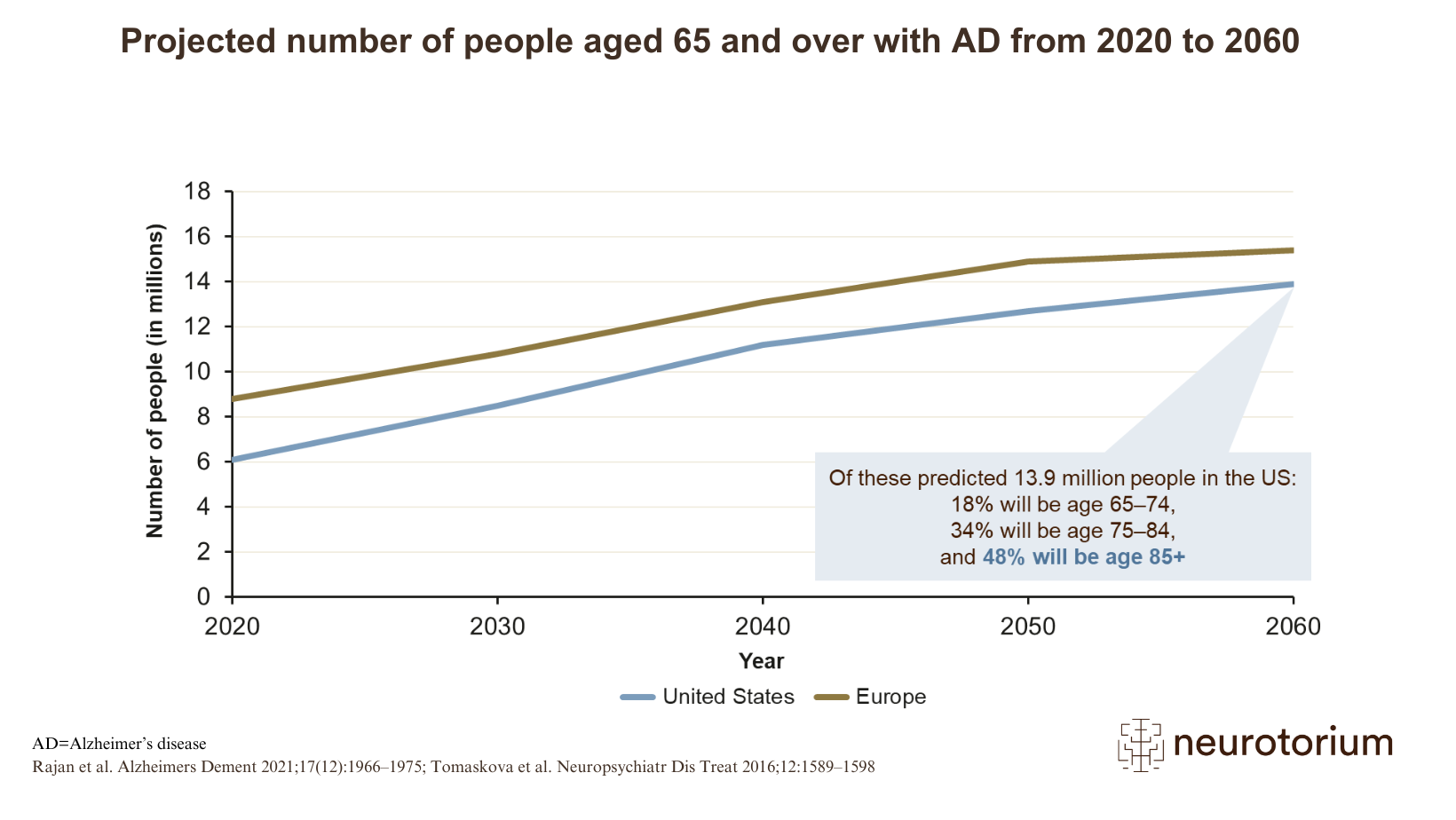
By 2025, it is predicted that the number of individuals aged ≥65 years with AD dementia in the US will reach 7.2 million, which is a 7% increase from 6.7 million affected individuals in 2023.1 Without the development of medical breakthroughs to prevent, slow, or cure AD, this value is predicted to increase to 13.9 million by 2060.1
Prediction of AD prevalence in the EU was conducted using a system dynamics model, which simulated population growth of the EU and the number of patients with AD.2 The model simulated up to 70 years, finding that the number of people with AD will increase from 2020 to 2060, and will then decrease from 2060 to 2080 due to changes in EU population size and structure.2 This trend was also seen when limiting prediction to the population aged above 80 years.2
Acess our Slide Deck on Epidemiology and burden of Alzheimer’s disease (AD) and learn more about the projected increase in the prevalence of Alzheimer’s disease dementia
Related content


Brain drug delivery systems, allied with their characteristics for overcoming the blood-brain barrier (BBB).

The use of a single treatment in heterogeneous populations has proved problematic in clinical trials undertaken in patients with neurodegenerative diseases.