

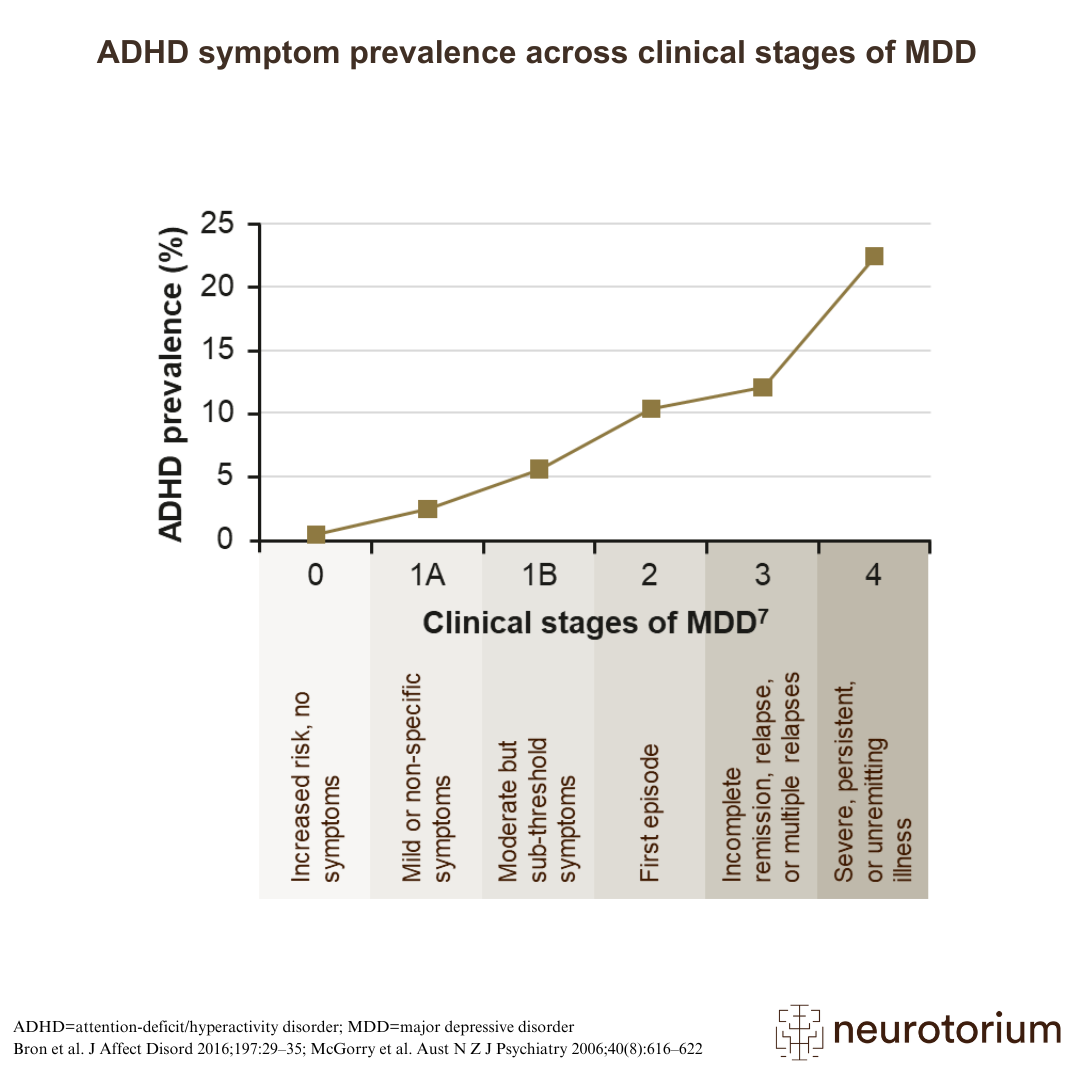
- MDD and ADHD are often seen clinically as comorbid disorders, with prevalence rates as high as 55%;1-4 One meta-analysis including 19 studies found a prevalence of depressive disorders in people with ADHD ranging from 8.6–55%, compared with a prevalence of 1.2–12.5% in the general population4
- Current MDD increases the risk of probable ADHD by 4.5 times5
- Inattention in MDD is distinct from ADHD, as in depression concentration difficulties are more prominent during a depressive episode6
- Interestingly, the prevalence of ADHD symptoms appears to be linked to the clinical stage of MDD, with a peak of prevalence during Stage 4 (chronic depressive disorder, characterised by severe, persistent, or unremitting illness)5
ADHD=attention-deficit/hyperactivity disorder; MDD=major depressive disorder
Related content
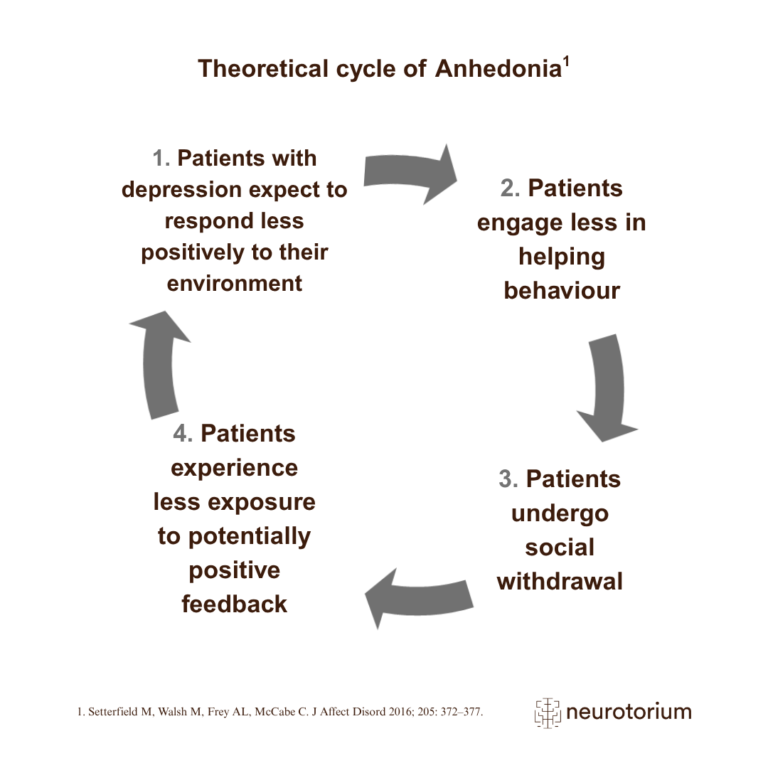
Theoretical cycle of anhedonia
One hypothesis of the cycle of anhedonia (loss of interest or pleasure) in patients with depression is illustrated in this image; this hypothesis comes from a series of experiments performed on a sample of psychology students.
29.07.2025
Depression
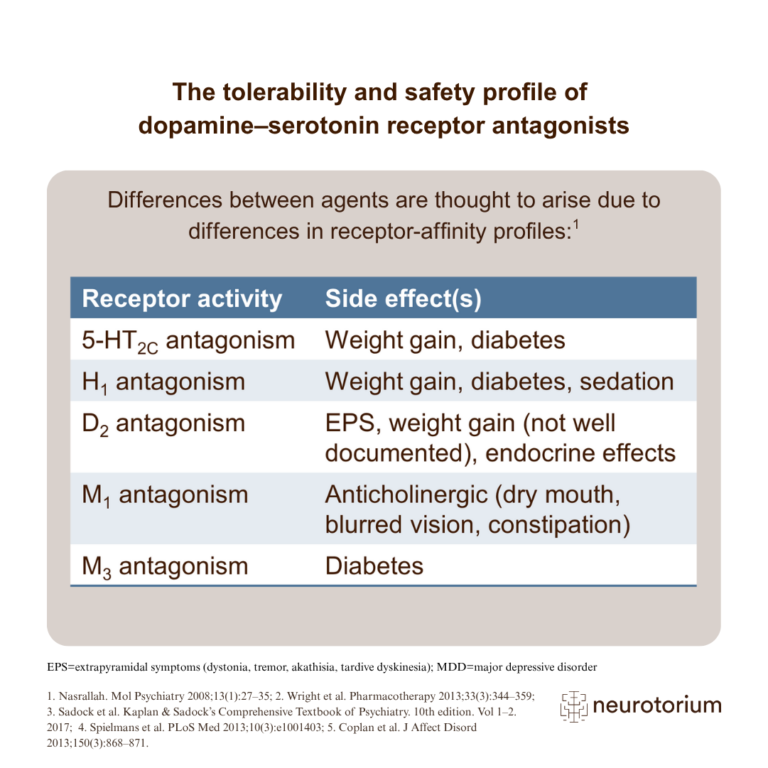
The tolerability and safety profile of dopamine–serotonin receptor antagonists
As adjunctive treatment in MDD, some dopamine–serotonin receptor antagonists are associated with sedating side effects, while others are more often associated with ‘activating’ side effects.
29.07.2025
Depression