

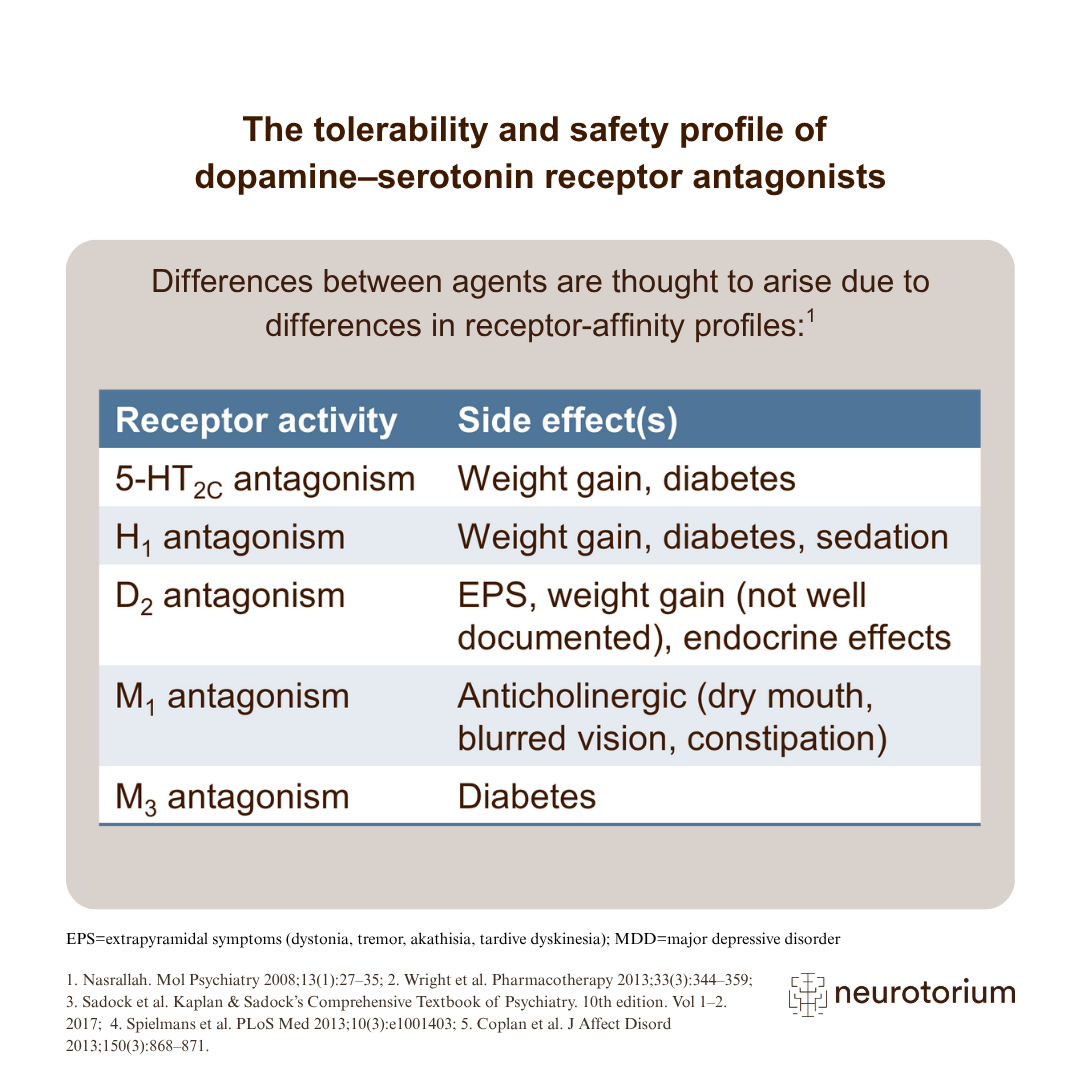
As a class, across indications and as adjunctive treatment in MDD, dopamine–serotonin receptor antagonists (also known as second-generation antipsychotics) are associated with some risk of EPS, and a varying risk of metabolic adverse effects.1-3 As adjunctive treatment in MDD, some dopamine–serotonin receptor antagonists are associated with sedating side effects, while others are more often associated with ‘activating’ side effects.2,4
Dopamine–serotonin antagonists, can also cause orthostatic hypotension and dry mouth2,3. Longer-term treatment is associated with tardive dyskinesia, although this is rare.2,5 Despite their efficacy in the adjunctive treatment of MDD, the side-effect profiles of dopamine–serotonin receptor antagonists may be unfavourable to some patients.2
EPS=extrapyramidal symptoms (dystonia, tremor, akathisia, tardive dyskinesia); MDD=major depressive disorder.
Related content
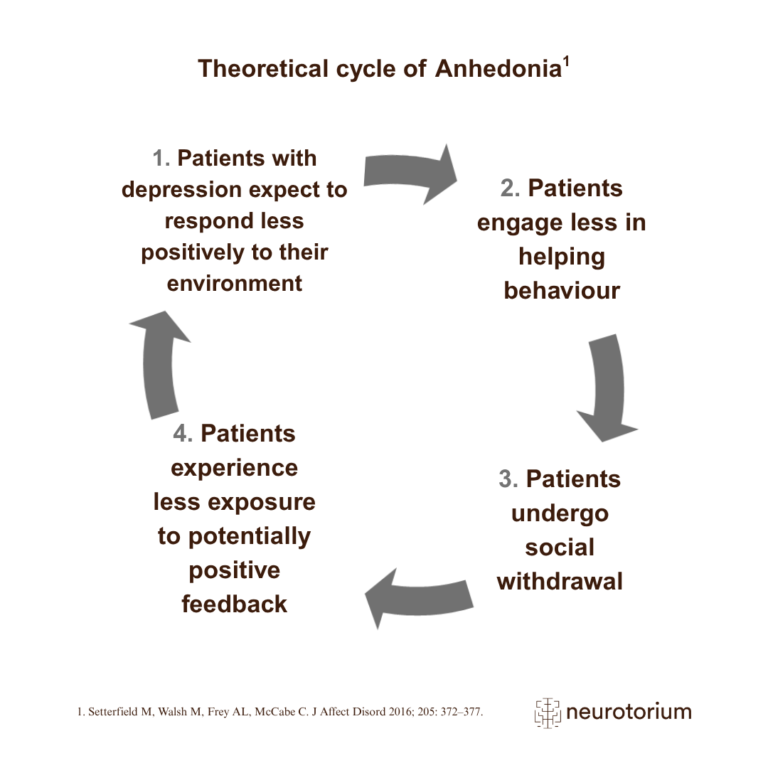
One hypothesis of the cycle of anhedonia (loss of interest or pleasure) in patients with depression is illustrated in this image; this hypothesis comes from a series of experiments performed on a sample of psychology students.
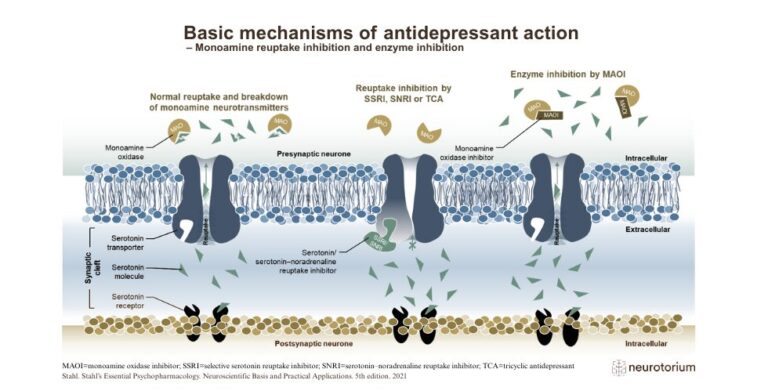
In general, antidepressants function by increasing the availability of monoamines in the synapse; these monoamines are thought to be depleted in depression.