

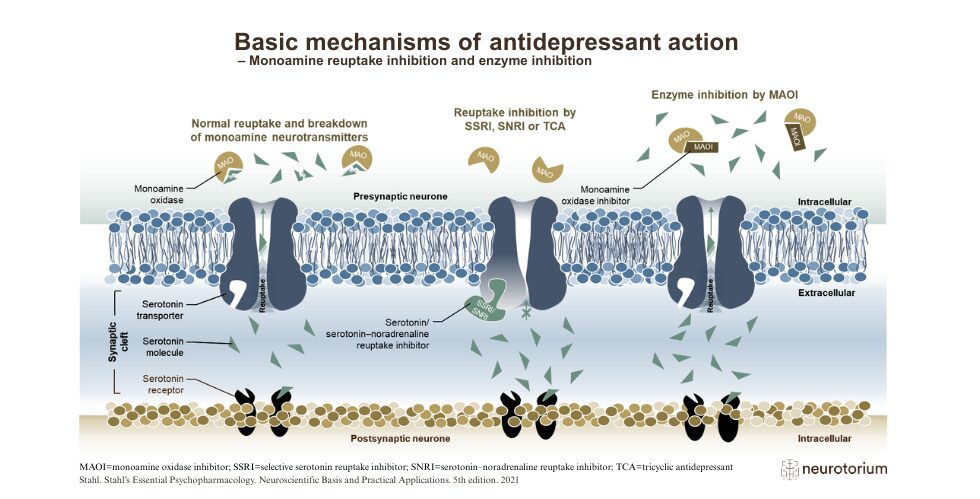
In general, antidepressants function by increasing the availability of monoamines (serotonin, noradrenaline, and/or dopamine) in the synapse; these monoamines are thought to be depleted in depression.1
- SSRIs, SNRIs and TCAs achieve this by blocking one or more of the monoamine transporters, thus preventing the neurotransmitters from being taken back into the axon terminal that released them.1
- MAOIs achieve this by inhibiting the activity of the monoamine oxidase enzyme (acting as an ‘enzyme inhibitor’) and thus preventing the breakdown of neurotransmitters.1
MAOI=monoamine oxidase inhibitor; SSRI=selective serotonin reuptake inhibitor; SNRI=serotonin–noradrenaline reuptake inhibitor; TCA=tricyclic antidepressant.
Related content
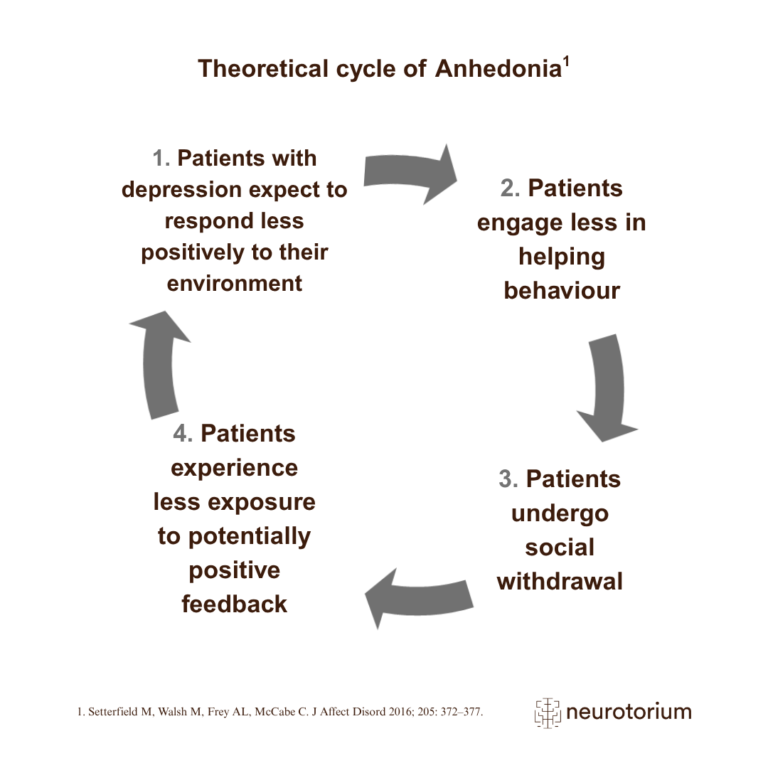
One hypothesis of the cycle of anhedonia (loss of interest or pleasure) in patients with depression is illustrated in this image; this hypothesis comes from a series of experiments performed on a sample of psychology students.
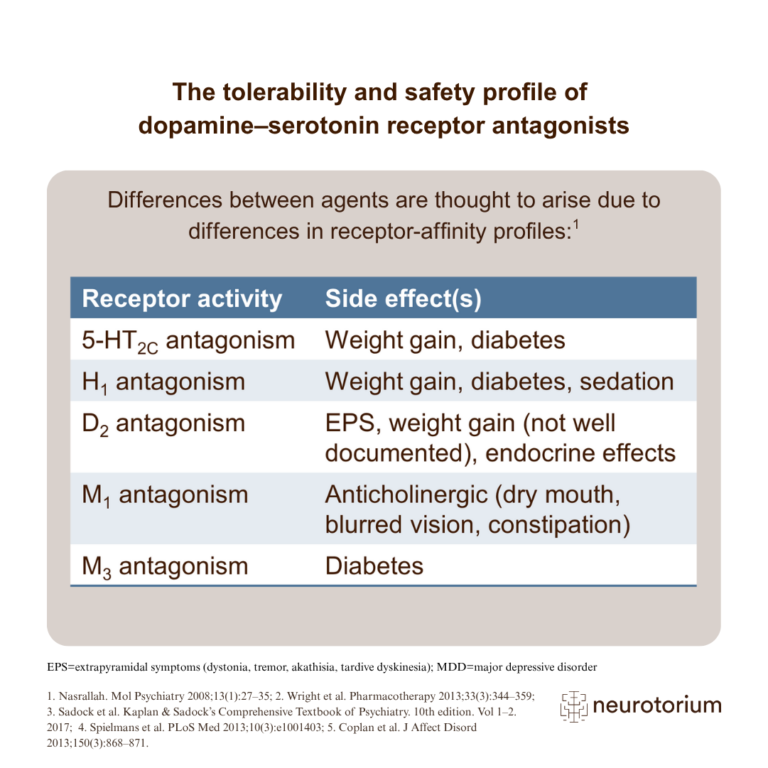
As adjunctive treatment in MDD, some dopamine–serotonin receptor antagonists are associated with sedating side effects, while others are more often associated with ‘activating’ side effects.