

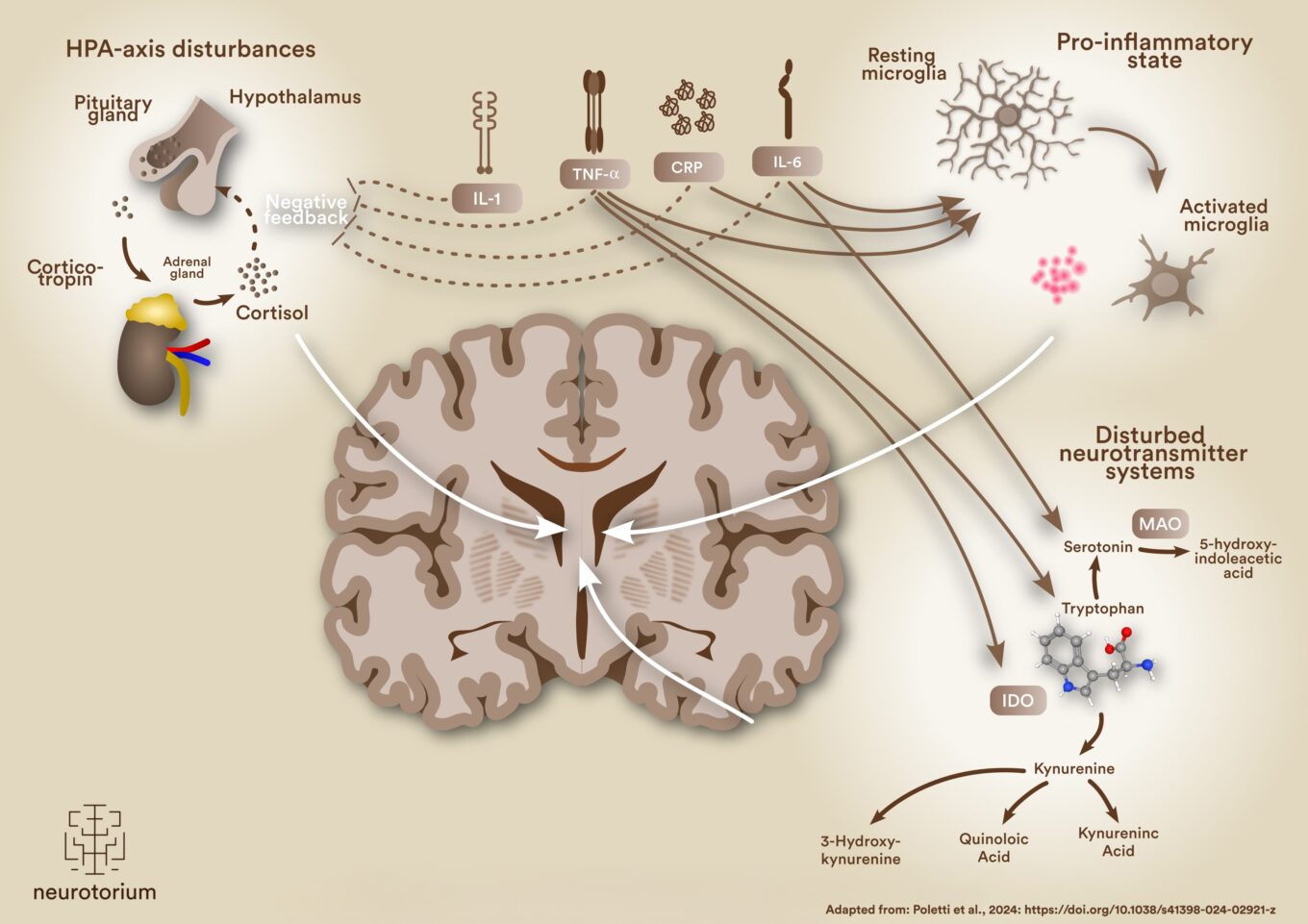
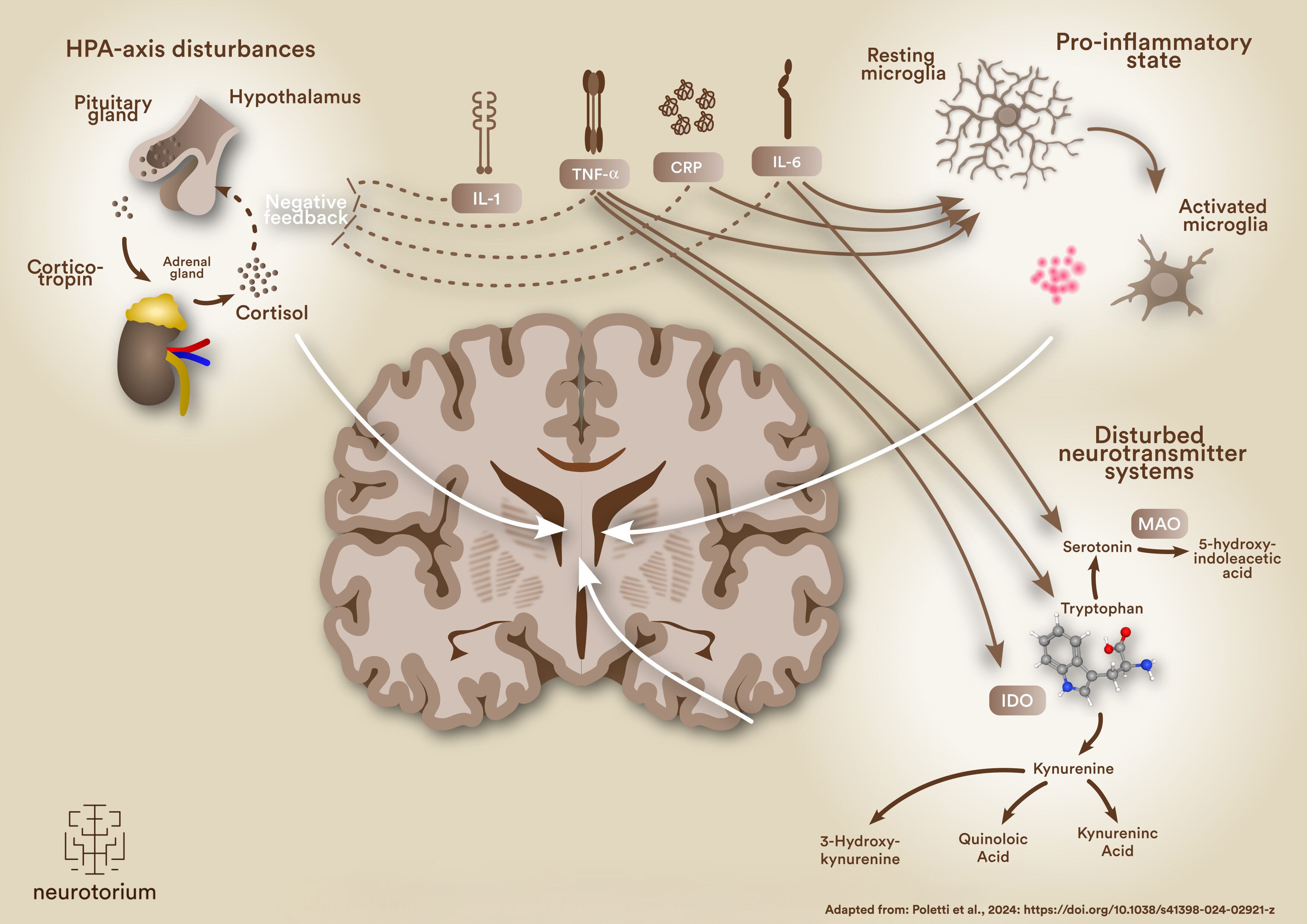
Acute immune activation triggers adaptive sickness behaviour through the release of pro-inflammatory cytokines, such as interleukin-1 and -6 (IL-1 and -6), tumor necrosis factor-α (TNF-α) and C-reactive protein (CRP). When the immune system is persistently activated, these disrupt normal feedback in the hypothalamic-pituitary-adrenal (HPA) axis (top left), leading to sustained cortisol release. Simultaneously, microglial cells in the brain shift from a resting to an activated state (top right). These disturbances contribute to a pro-inflammatory state that impairs brain regions involved in motivation, reward and cognition. Dysregulation of other pathways such as the tryptophan–kynurenine pathway (bottom right) further contributes to neurotransmitter imbalances, reducing serotonin availability and promoting neurotoxic metabolites.
Related content
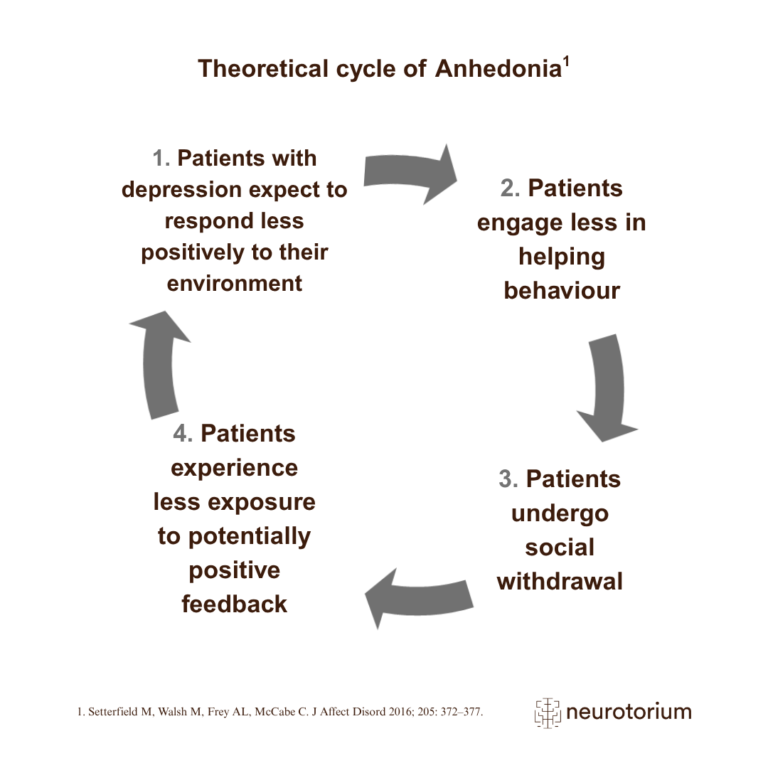
One hypothesis of the cycle of anhedonia (loss of interest or pleasure) in patients with depression is illustrated in this image; this hypothesis comes from a series of experiments performed on a sample of psychology students.
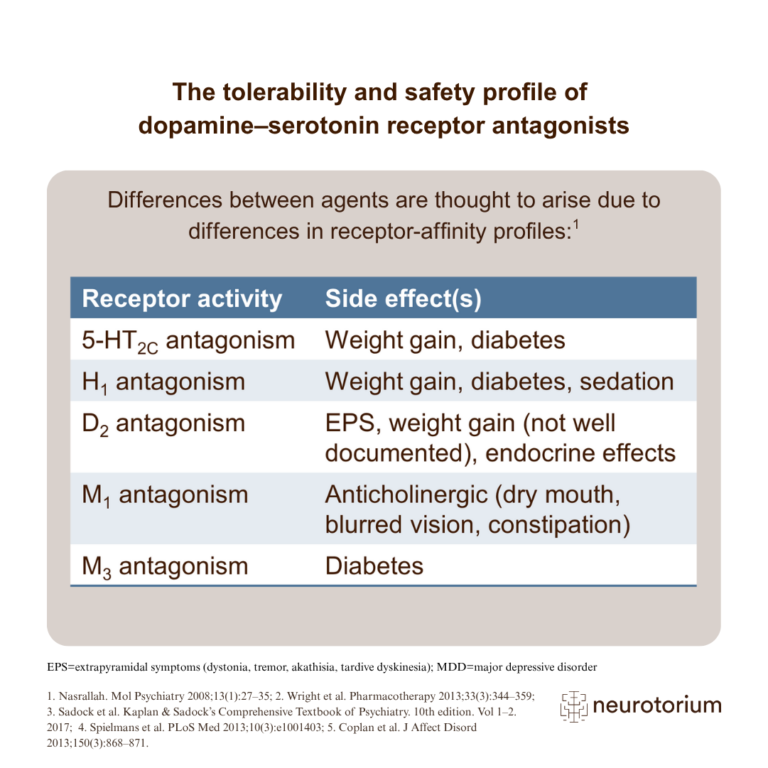
As adjunctive treatment in MDD, some dopamine–serotonin receptor antagonists are associated with sedating side effects, while others are more often associated with ‘activating’ side effects.