

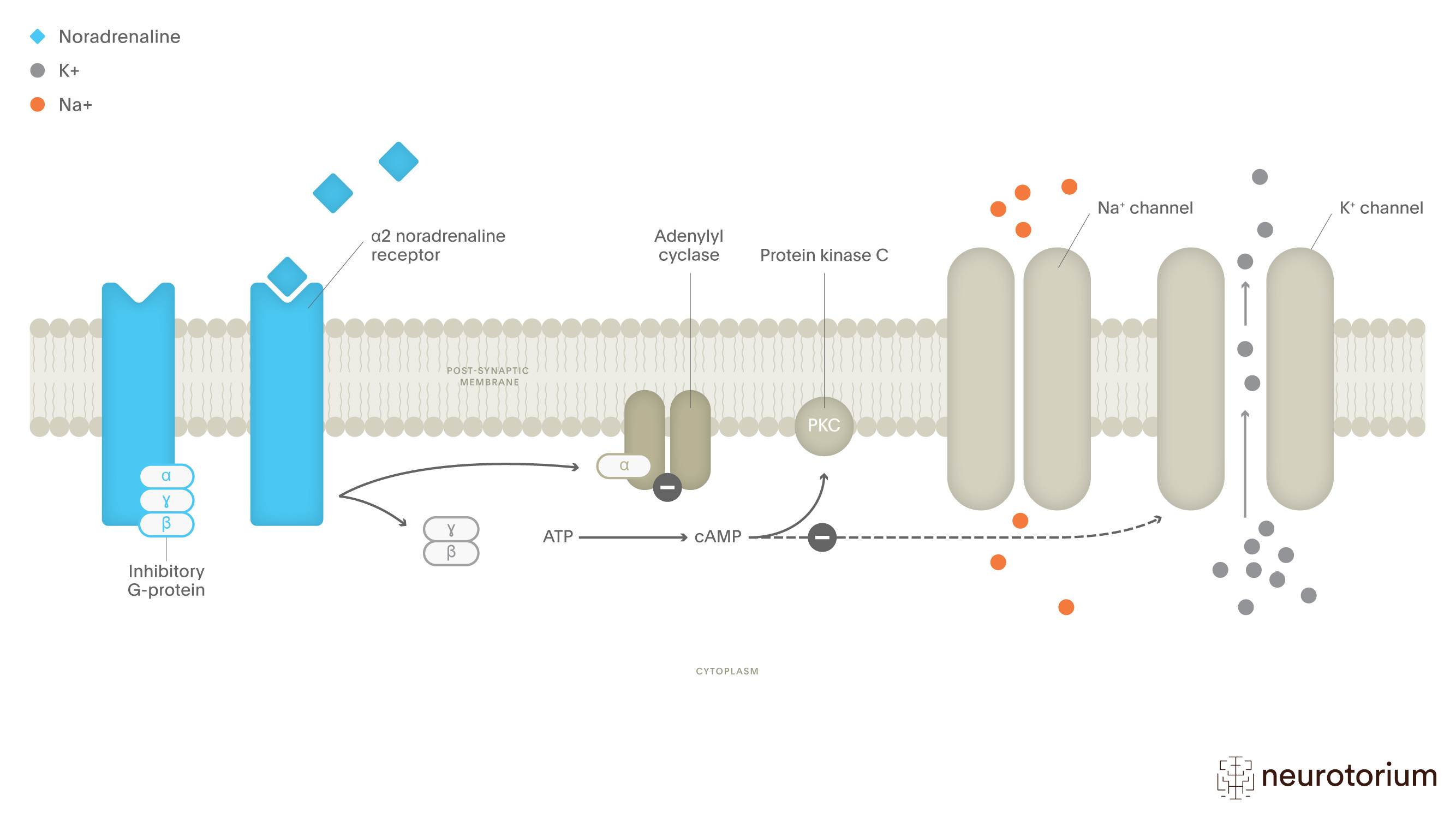
Noradrenaline binding to α2 noradrenaline receptor inhibits noradrenaline release. The α2 noradrenaline receptor is coupled to inhibitory G-proteins. Following agonist binding, the G-protein dissociates from the receptor and inhibits adenylyl cyclase. This causes the inactivation of adenylyl cyclase, resulting in a decrease of cyclic adenosine monophosphate (cAMP) produced from ATP. As cAMP is inhibited, potassium efflux through calcium-activated channels prevents calcium ions from entering the nerve terminal, leading to hyperpolarization and a suppression of neural firing and neurotransmitter release.1
Related content
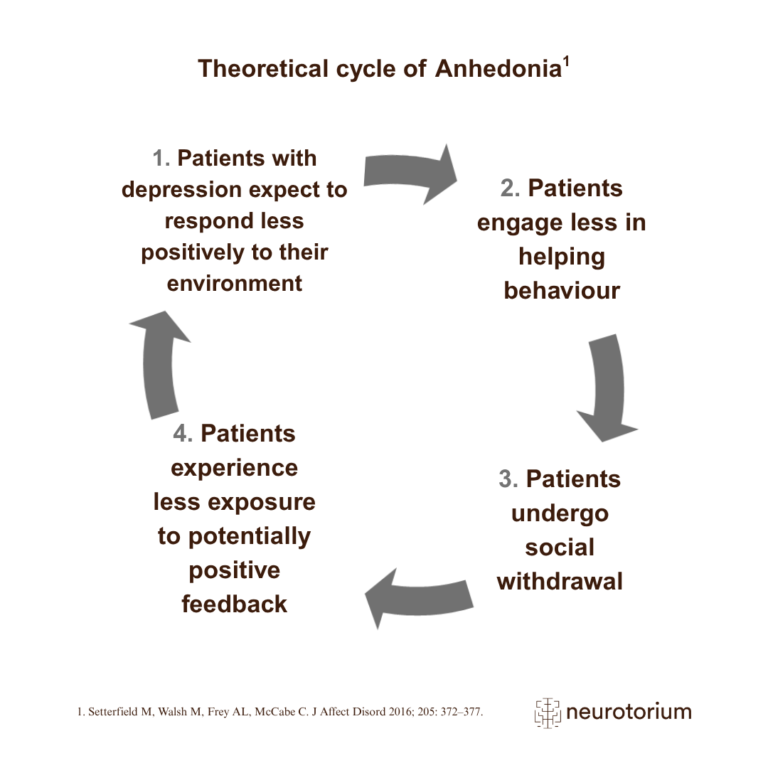
One hypothesis of the cycle of anhedonia (loss of interest or pleasure) in patients with depression is illustrated in this image; this hypothesis comes from a series of experiments performed on a sample of psychology students.
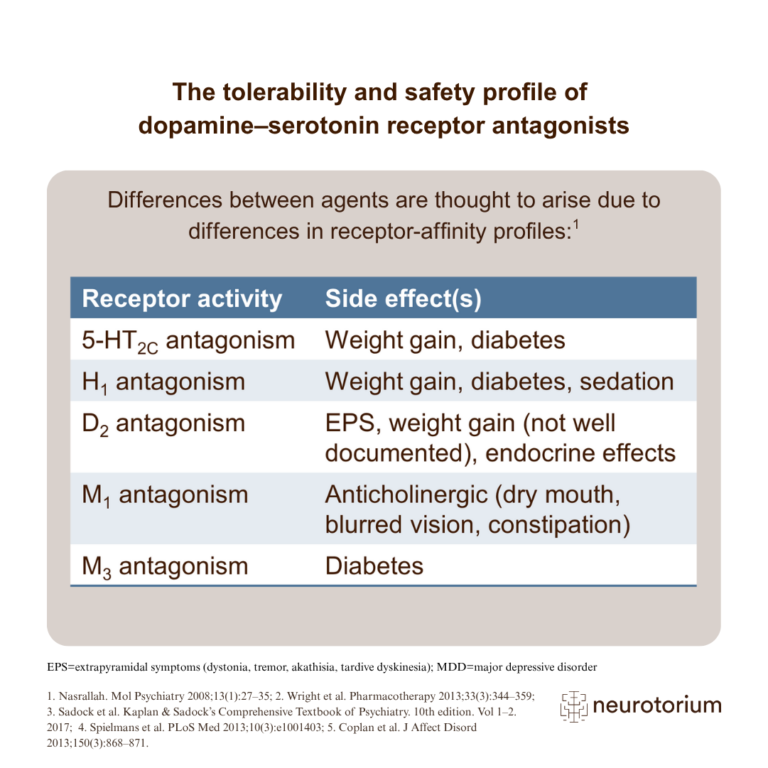
As adjunctive treatment in MDD, some dopamine–serotonin receptor antagonists are associated with sedating side effects, while others are more often associated with ‘activating’ side effects.