


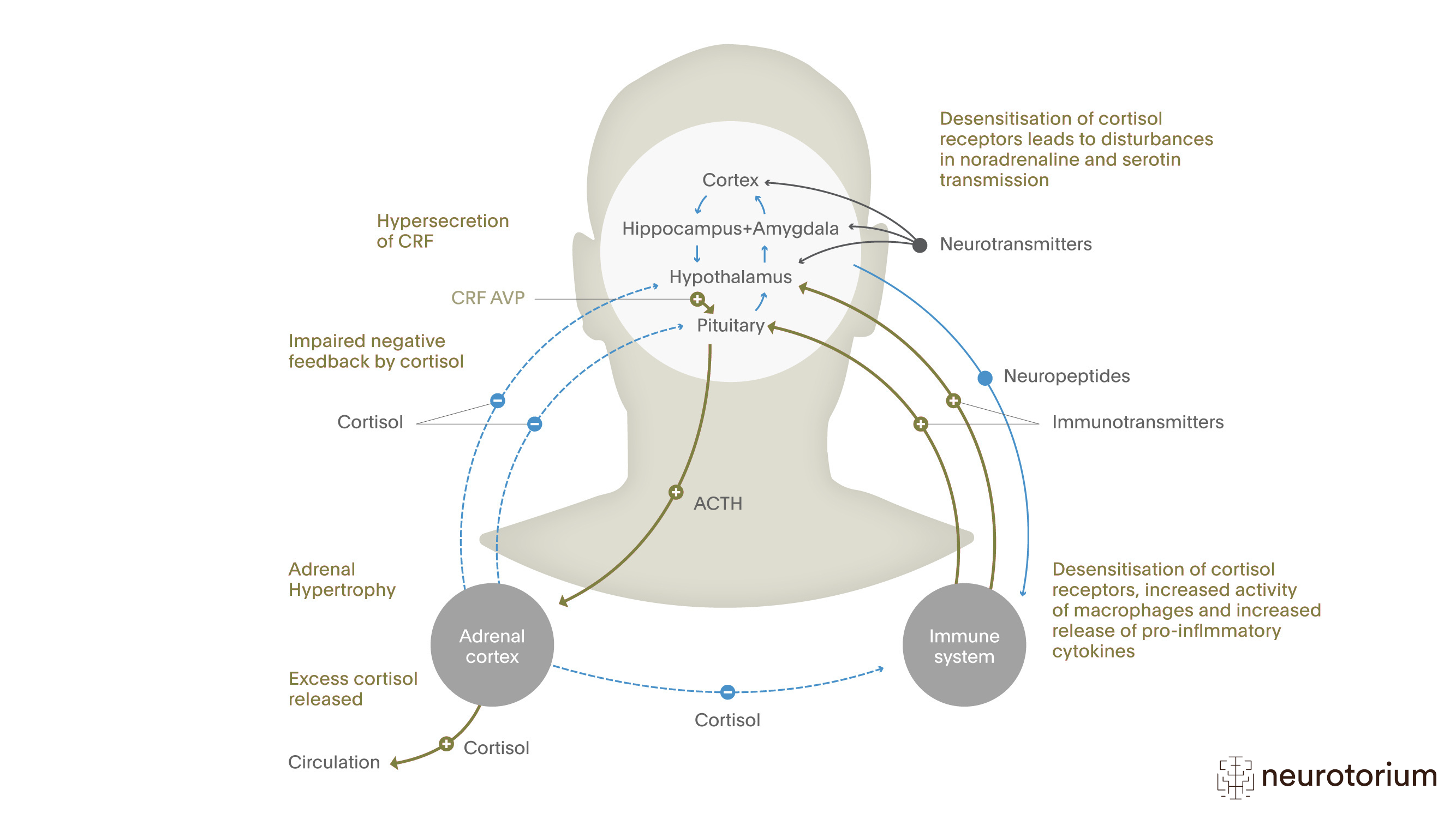
In depression, the hypothalamic-pituitary-adrenal (HPA) axis is upregulated with a down-regulation of its negative feedback controls. Corticotropin-releasing factor (CRF) is hypersecreted from the hypothalamus and induces the release of adrenocorticotropin hormone (ACTH) from the pituitary. ACTH interacts with receptors on adrenocortical cells and cortisol is released from the adrenal glands; adrenal hypertrophy can also occur. Release of cortisol into the circulation has a number of effects, including elevation of blood glucose. The negative feedback of cortisol to the hypothalamus, pituitary and immune system is impaired. This leads to continual activation of the HPA axis and excess cortisol release. Cortisol receptors become desensitized leading to increased activity of the pro-inflammatory immune mediators and disturbances in neurotransmitter transmission.
Related content
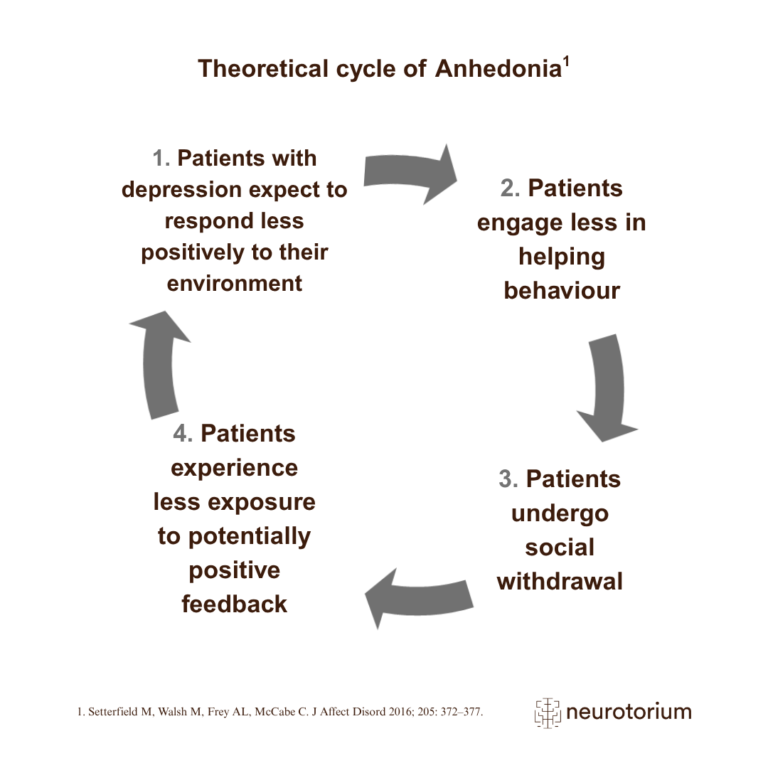
One hypothesis of the cycle of anhedonia (loss of interest or pleasure) in patients with depression is illustrated in this image; this hypothesis comes from a series of experiments performed on a sample of psychology students.
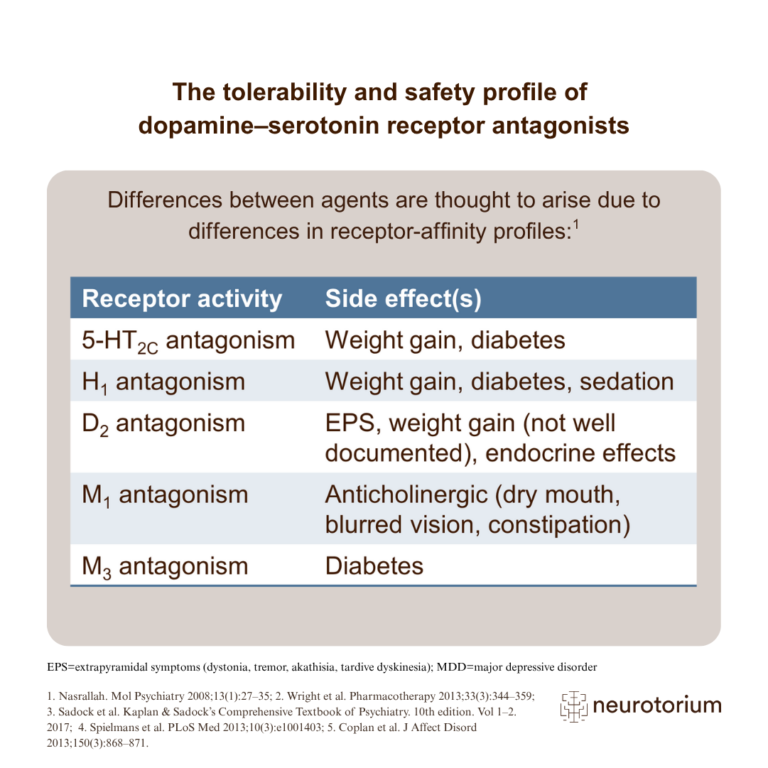
As adjunctive treatment in MDD, some dopamine–serotonin receptor antagonists are associated with sedating side effects, while others are more often associated with ‘activating’ side effects.