

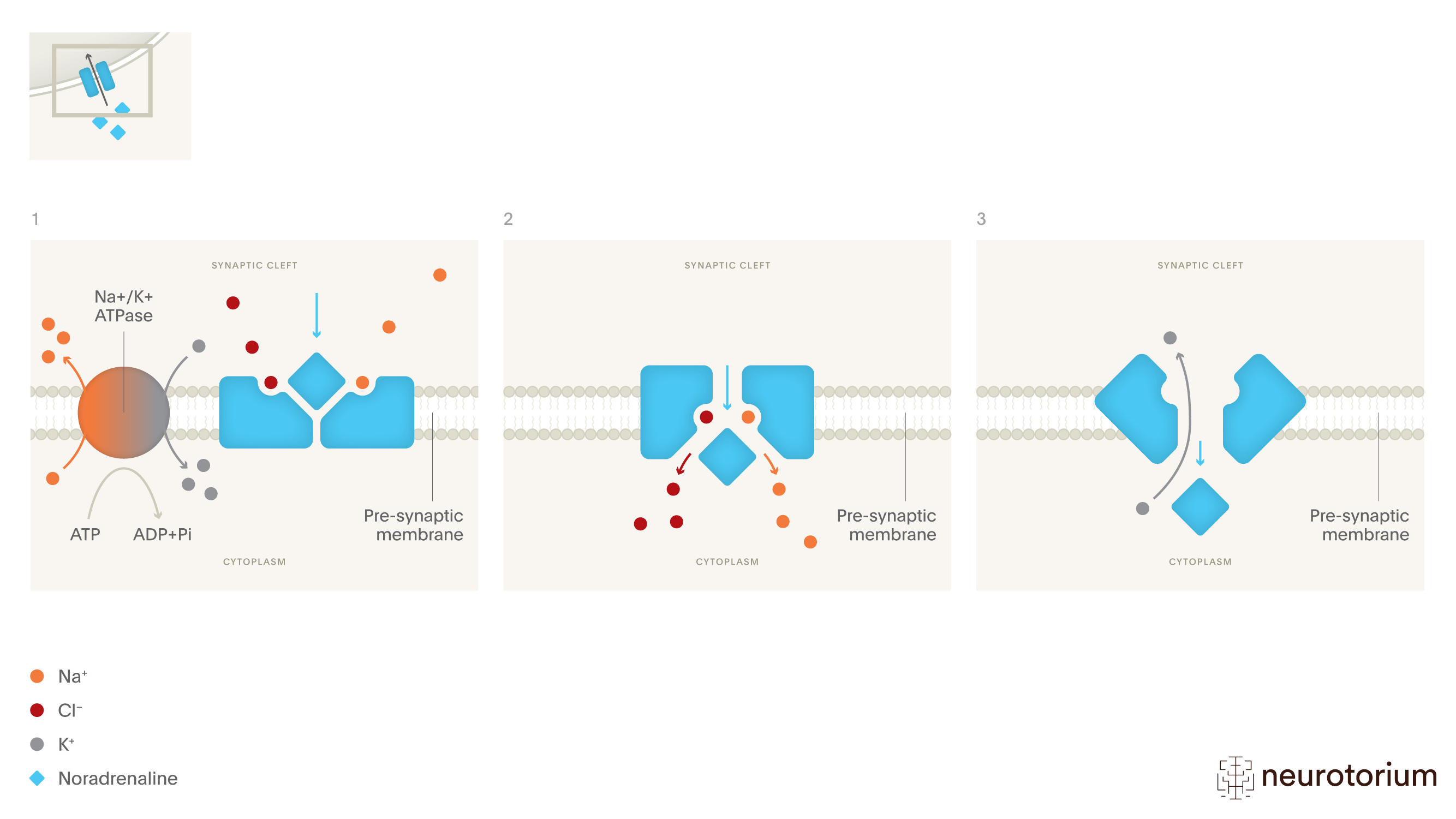
The action of noradrenaline at the synapse is terminated by its re-uptake across the pre-synaptic membrane. This is an energy dependent process. Sodium/potassium ATPases use energy from ATP hydrolysis to create a concentration gradient of ions across the pre-synaptic membrane that drives the opening of the transporter and co-transport of sodium and chloride ions and noradrenaline from the synaptic cleft. Potassium ions binding to the transporter enable it to return to the outward position. Release of the potassium ions into the synaptic cleft equilibrates the ionic gradient across the pre-synaptic membrane. The noradrenaline re-uptake transporter is then available to bind another noradrenaline molecule for re-uptake.
Related content
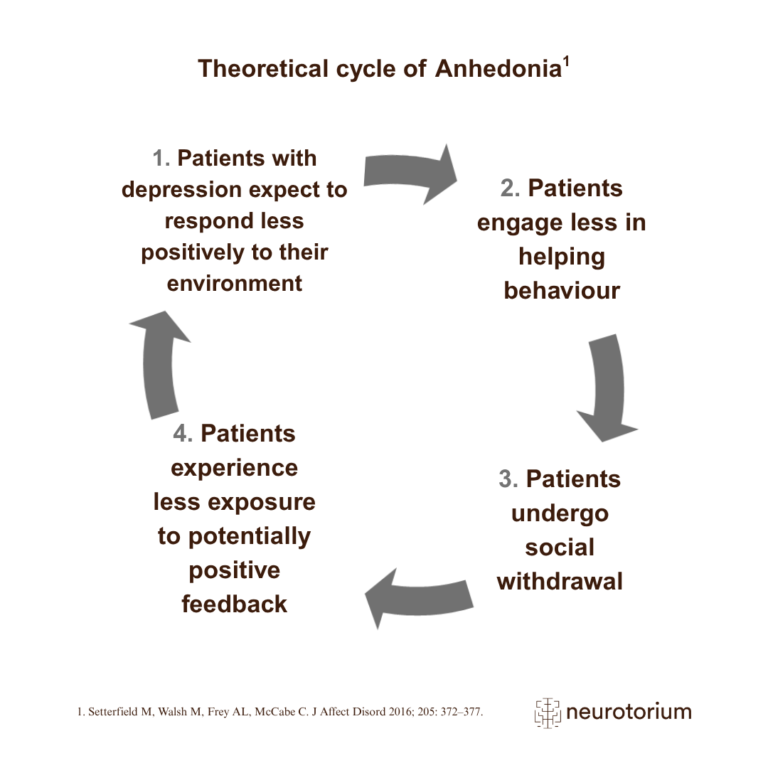
One hypothesis of the cycle of anhedonia (loss of interest or pleasure) in patients with depression is illustrated in this image; this hypothesis comes from a series of experiments performed on a sample of psychology students.
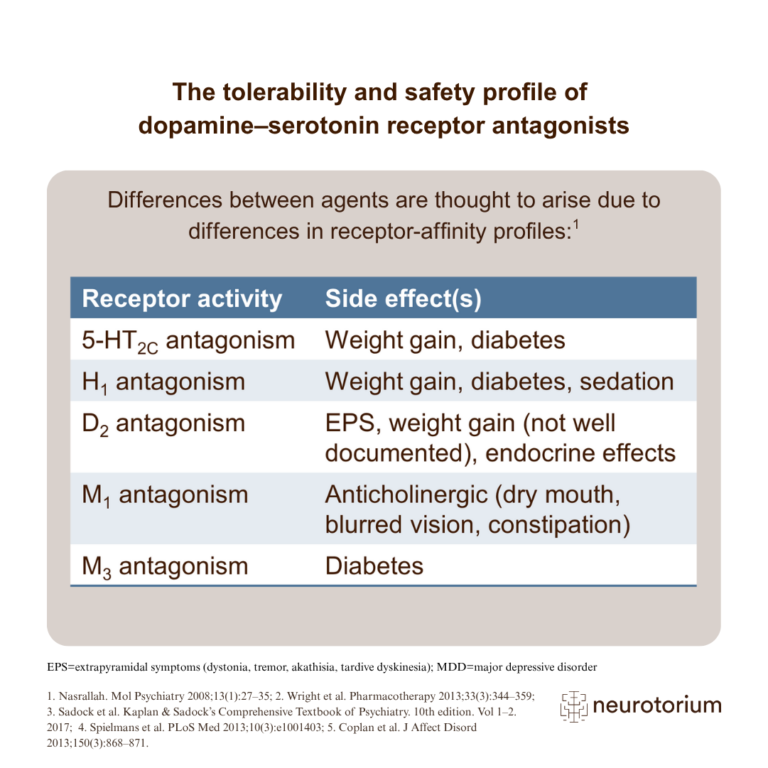
As adjunctive treatment in MDD, some dopamine–serotonin receptor antagonists are associated with sedating side effects, while others are more often associated with ‘activating’ side effects.