

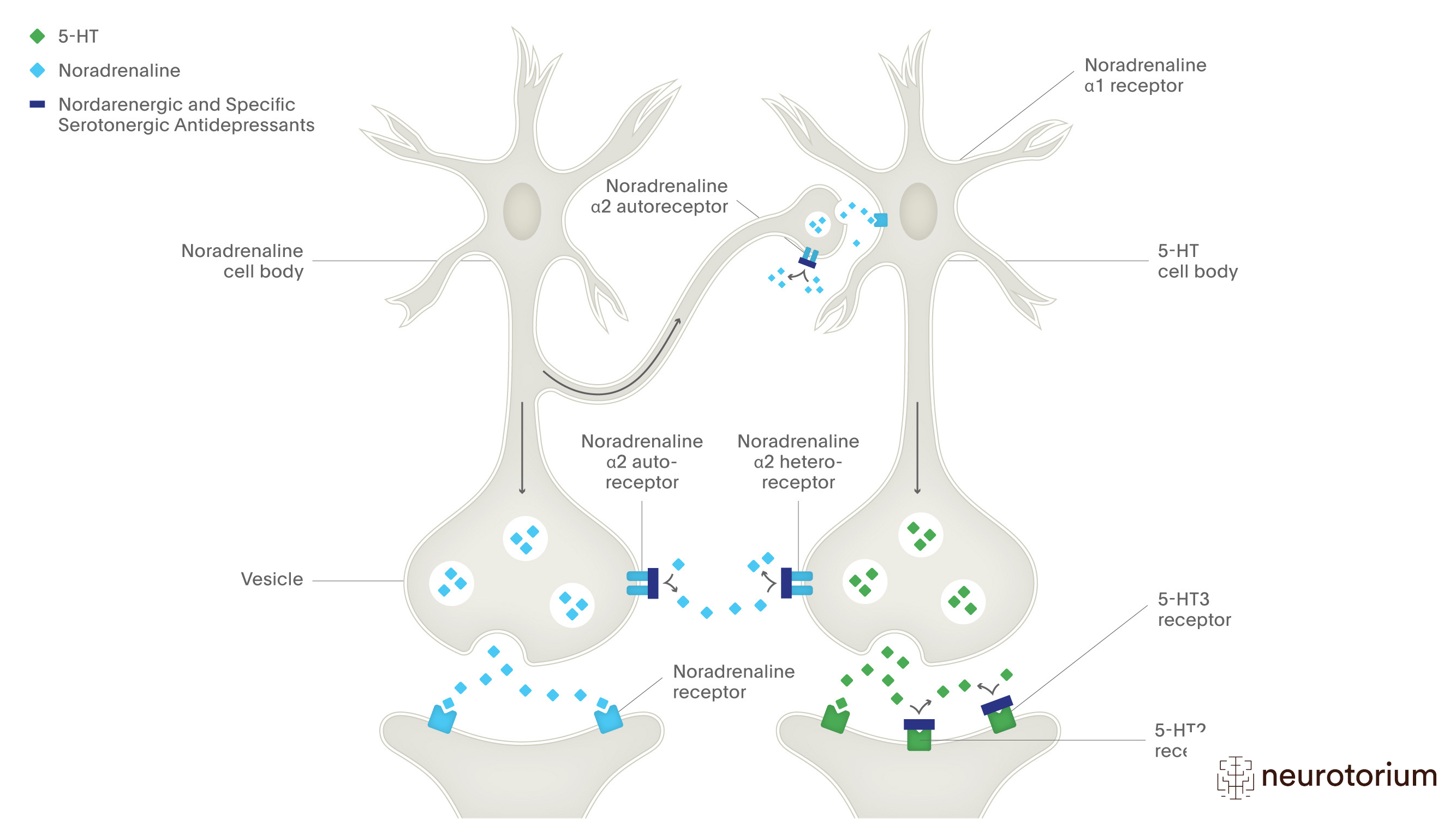
Depression is associated with reduced levels of monoamines in the brain. Noradrenergic and specific serotonergic antidepressants (NaSSAs) have a dual mechanism of action that increases the concentration of 5-HT and noradrenaline in the synaptic cleft to within the normal range. NaSSAs bind to and inhibit both noradrenaline a2-autoreceptors and noradrenaline a2-heteroeceptors. This action prevents the negative feedback effect of synaptic noradrenaline on 5-HT and noradrenaline neurotransmission, sustaining neurotransmission. NaSSAs also block 5-HT2 and 5-HT3 receptors on the post-synaptic membrane, which causes enhanced 5-HT1 mediated neurotransmission.1
Click here: Explore the use of noradrenergic and specific serotonergic antidepressants
Related content
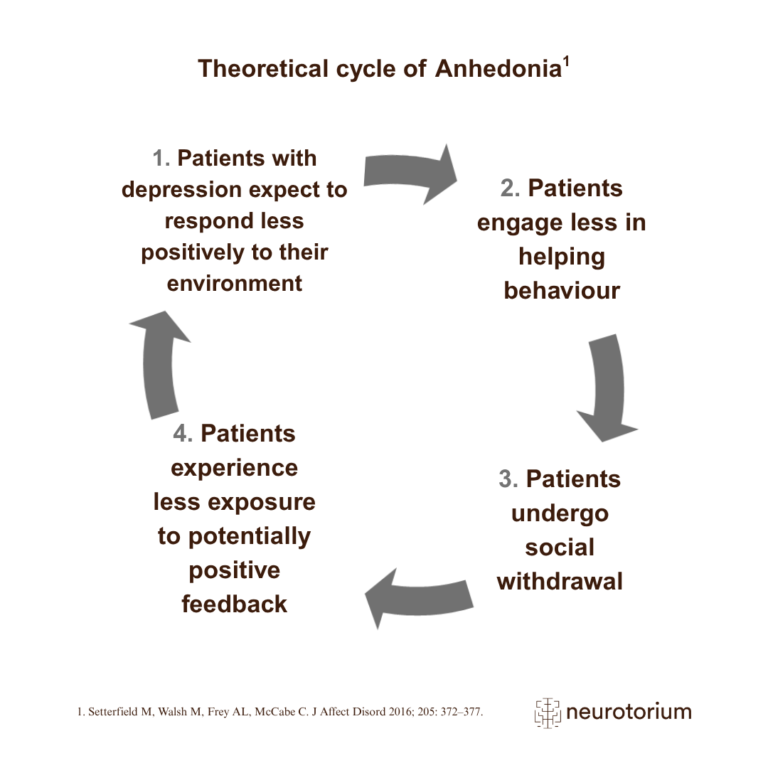
One hypothesis of the cycle of anhedonia (loss of interest or pleasure) in patients with depression is illustrated in this image; this hypothesis comes from a series of experiments performed on a sample of psychology students.
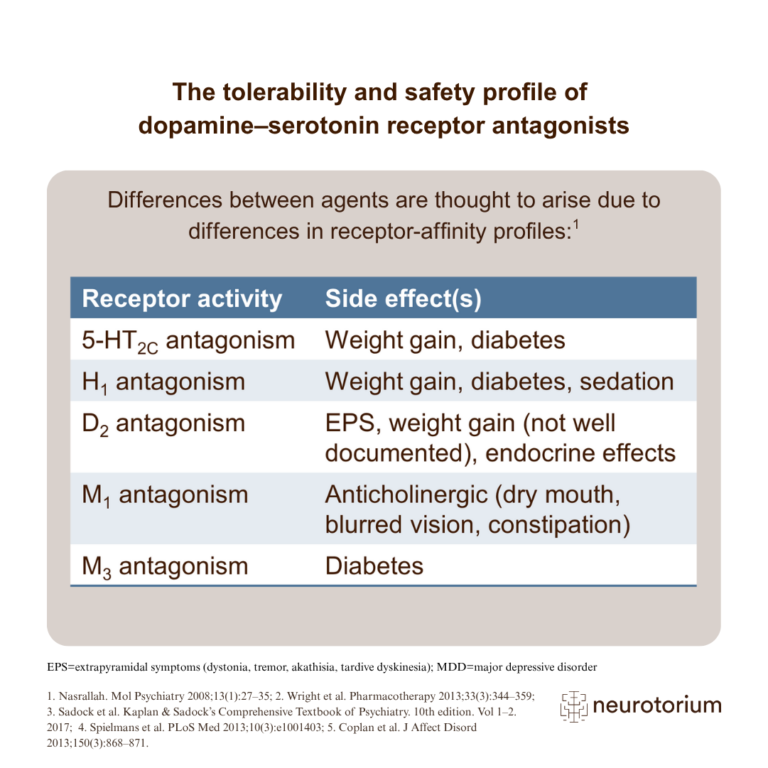
As adjunctive treatment in MDD, some dopamine–serotonin receptor antagonists are associated with sedating side effects, while others are more often associated with ‘activating’ side effects.