


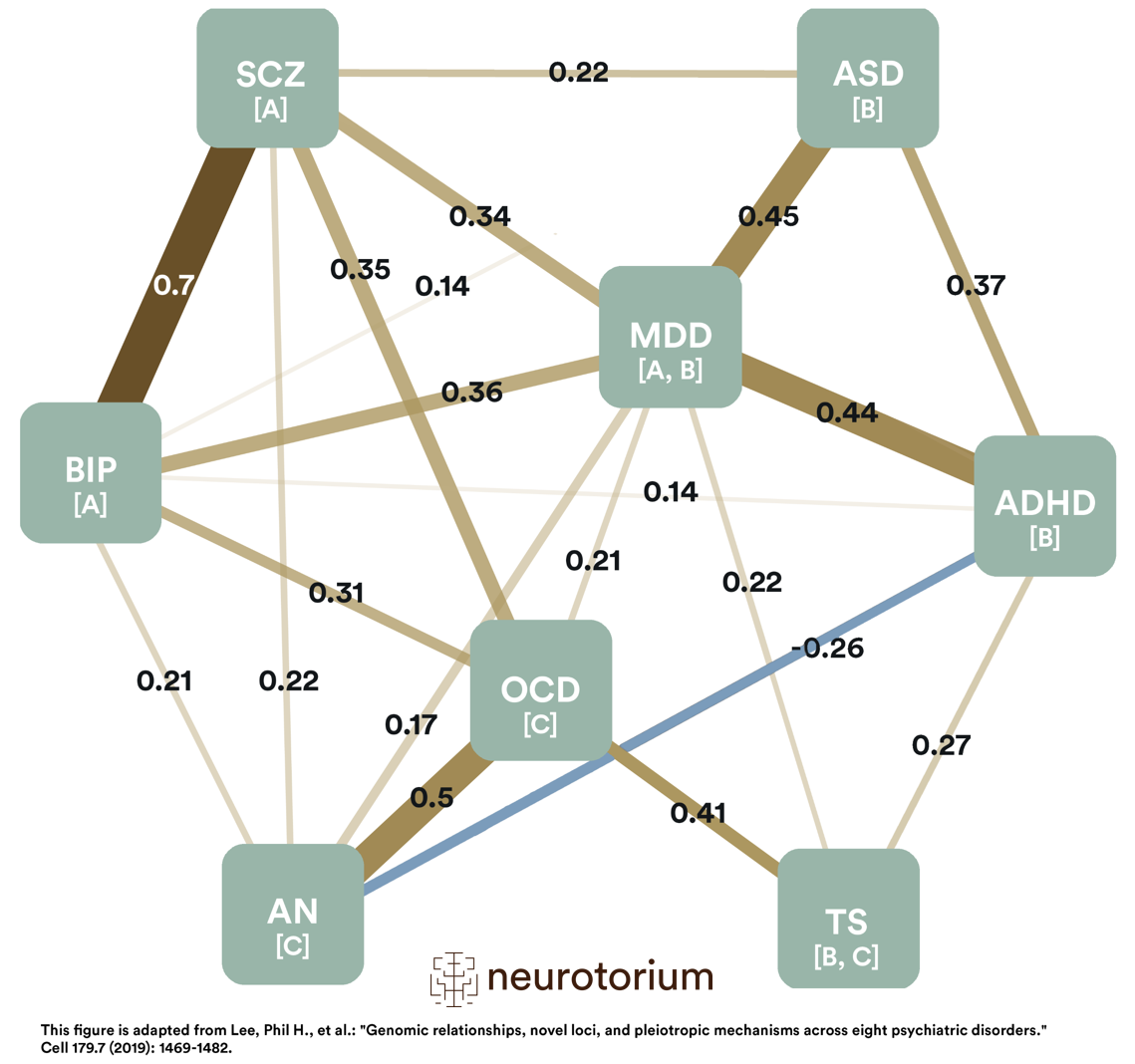
This figure represents the SNP (Single Nucleotide Polymorphism)-based genetic correlations between 8 major psychiatric disorders. Each node represents a disorder, with numbers on the lines indicating the strength of the pairwise correlations. The width of the lines increases with the absolute values of genetic correlations (rg). The first group of disorders is annotated with “A”; these are the mood and psychotic disorders. The second group, represented with “B,” is early-onset neurodevelopmental disorders. The third group is marked with “C,” disorders with compulsive behaviors. Please note that both MDD and TS belong to two groups. While MDD belongs to mood and psychotic disorders (A) and early-onset neurodevelopmental disorders (B), TS belongs to early-onset neurodevelopmental disorders (B) and disorders with compulsive behaviors (C). This figure is adapted from Lee, Phil H., et al.: “Genomic relationships, novel loci, and pleiotropic mechanisms across eight psychiatric disorders.” Cell 179.7 (2019): 1469-1482.
ADHD: Attention-Deficit/Hyperactivity Disorder; AN: Anorexia Nervosa; ASD: Autism Spectrum Disorder; BIP: Bipolar Disorder; MDD: Major Depressive Disorder; OCD: Obsessive-Compulsive Disorder; SCZ: Schizophrenia; TS: Tourette Syndrome.
Related content
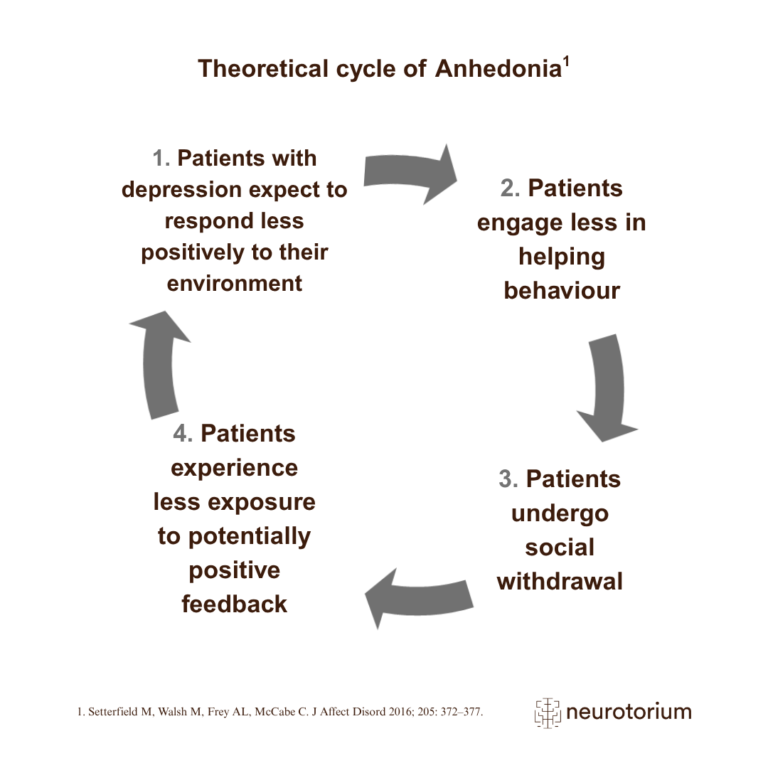
One hypothesis of the cycle of anhedonia (loss of interest or pleasure) in patients with depression is illustrated in this image; this hypothesis comes from a series of experiments performed on a sample of psychology students.
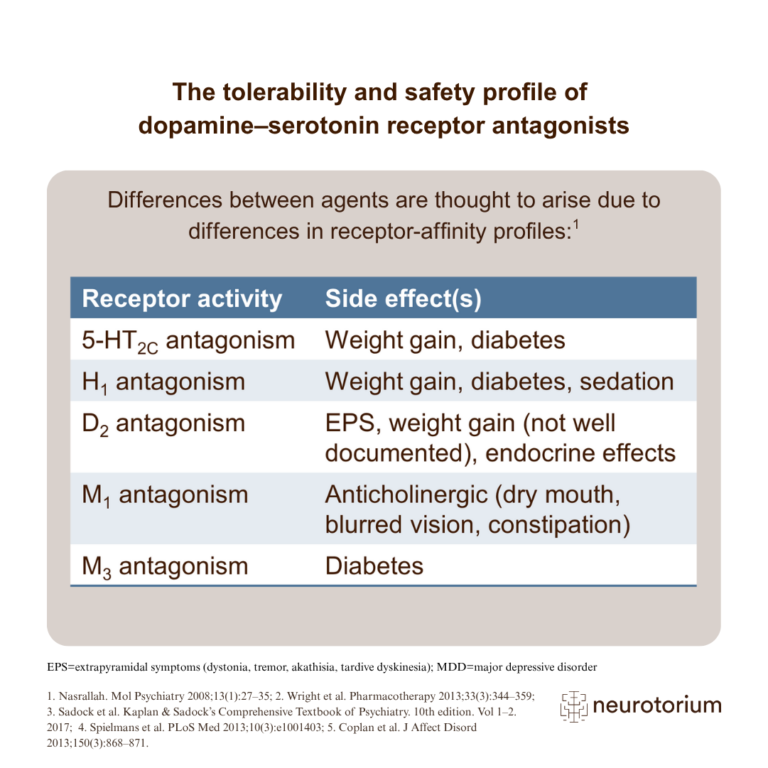
As adjunctive treatment in MDD, some dopamine–serotonin receptor antagonists are associated with sedating side effects, while others are more often associated with ‘activating’ side effects.