

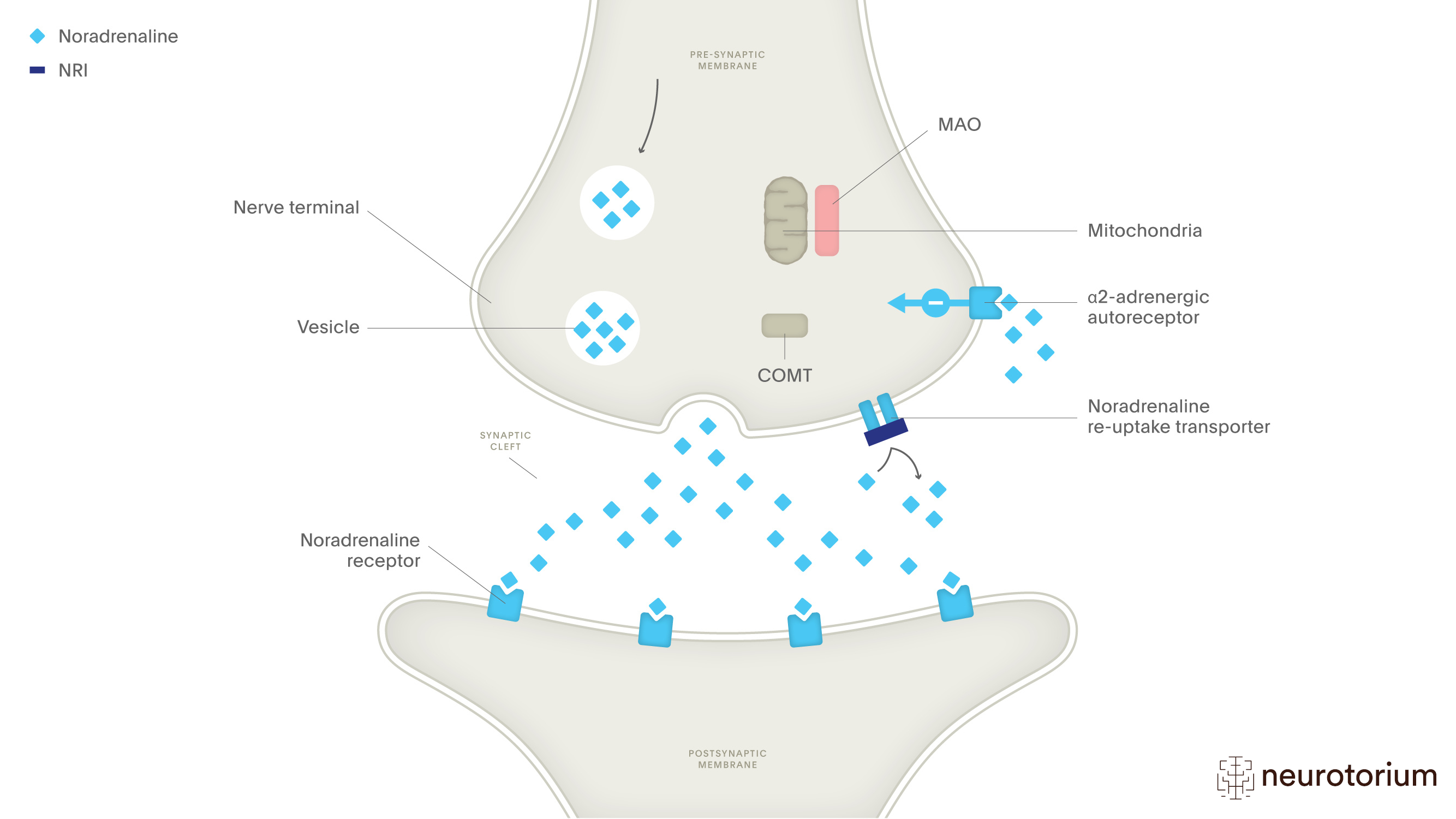
Depression is associated with reduced levels of the monoamines in the brain, such as noradrenaline. The selective noradrenaline re-uptake inhibitors (NRIs) are thought to restore the levels of noradrenaline in the synaptic cleft by binding at the noradrenaline re-uptake transporter preventing the re-uptake and subsequent degradation of noradrenaline. This re-uptake blockade leads to the accumulation of noradrenaline in the synaptic cleft and the concentration of noradrenaline returns to within the normal range. This action of NRIs is though to contribute to the alleviation of the symptoms of depression. In the presence of the NRI, small amounts of noradrenaline continue to be degraded in the synaptic cleft.1
Click here: Learn about specific noradrenaline re-uptake inhibitors
Related content
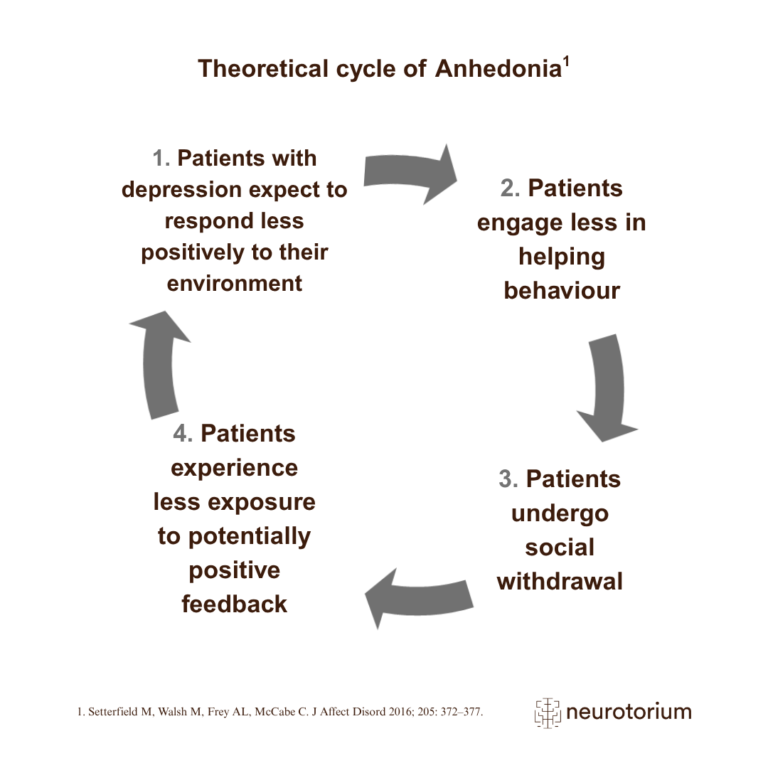
One hypothesis of the cycle of anhedonia (loss of interest or pleasure) in patients with depression is illustrated in this image; this hypothesis comes from a series of experiments performed on a sample of psychology students.
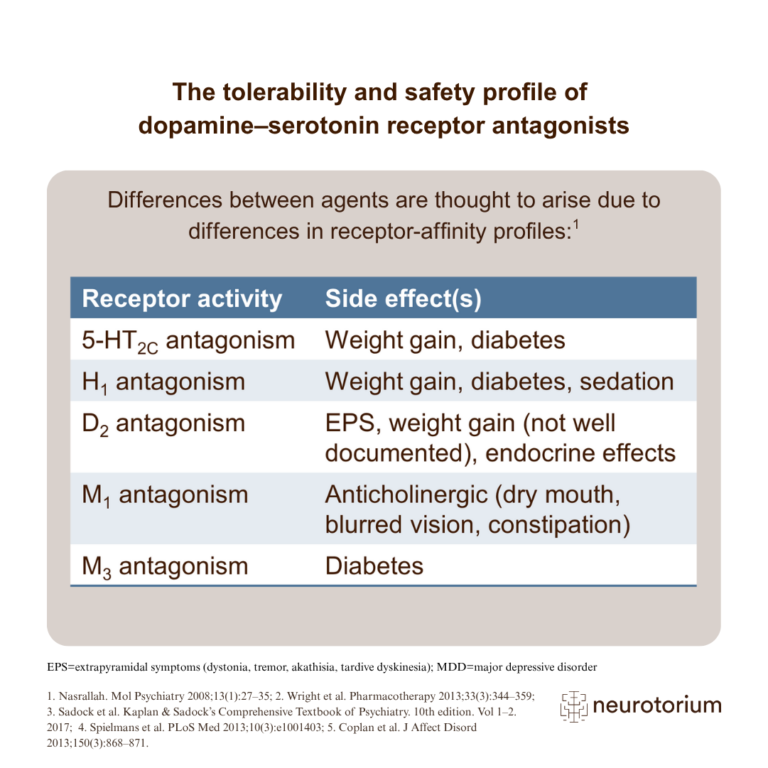
As adjunctive treatment in MDD, some dopamine–serotonin receptor antagonists are associated with sedating side effects, while others are more often associated with ‘activating’ side effects.