

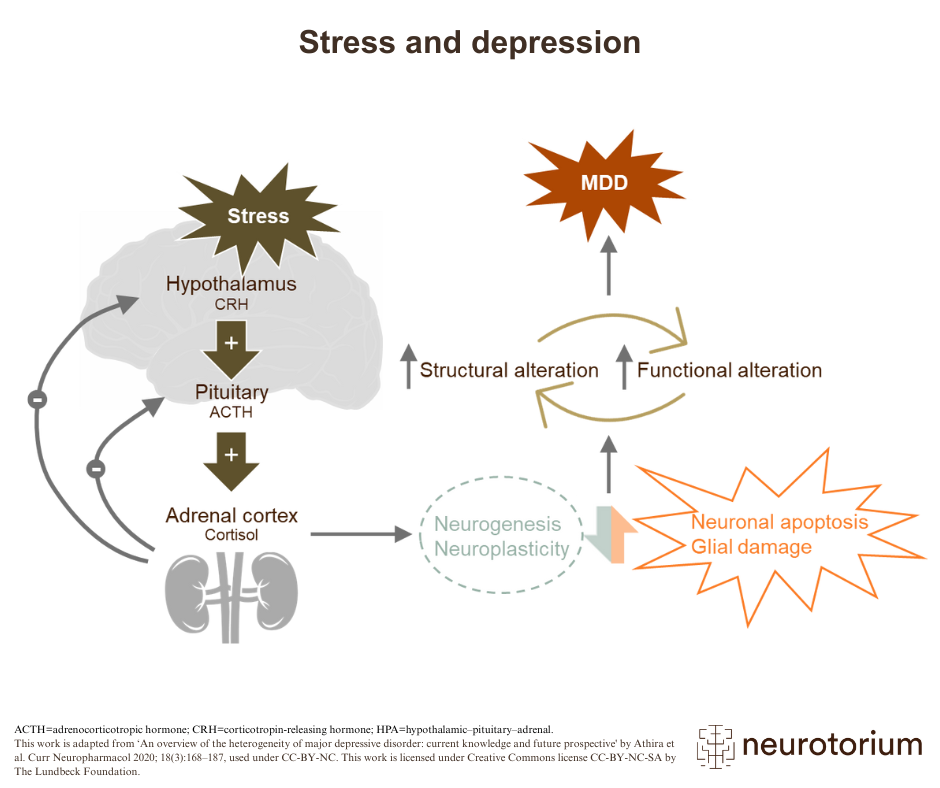
Major depressive disorder is a multifactorial disorder strongly associated with pathophysiological components related to stress.1 Chronic stress results in the dysregulation of the hypothalamo–pituitary–adrenal axis, resulting in higher levels of inflammation, higher oxidative and endoplasmic reticulum stress, increased levels of mitochondrial damage and dysfunction, and increased glutamate neurotransmission.1 These detrimental changes, coupled with reduced production of neurotrophic factors (such as the brain-derived neurotrophic factor), reduced monoamine neurotransmission, lower levels of the gamma-aminobutyric acid and reduced endocannabinoid signalling, then lead to structural and functional alterations in the brain, and to the development of major depressive disorder.1
Related content
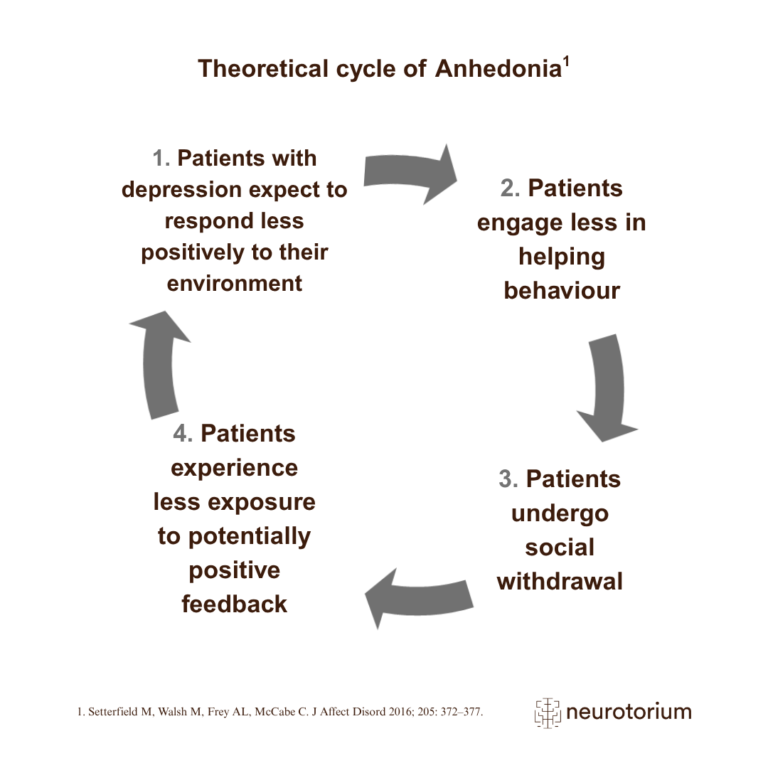
One hypothesis of the cycle of anhedonia (loss of interest or pleasure) in patients with depression is illustrated in this image; this hypothesis comes from a series of experiments performed on a sample of psychology students.
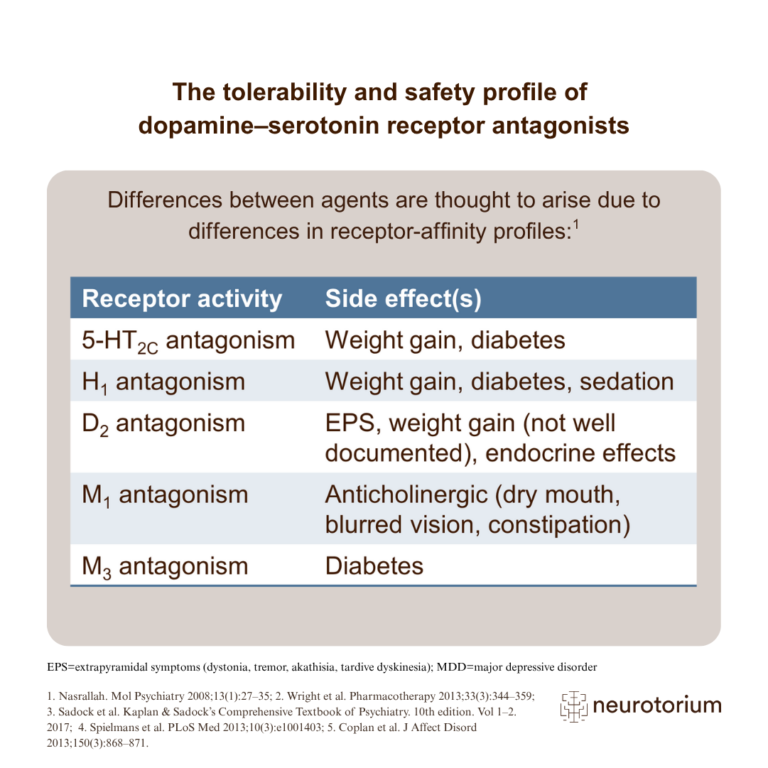
As adjunctive treatment in MDD, some dopamine–serotonin receptor antagonists are associated with sedating side effects, while others are more often associated with ‘activating’ side effects.