

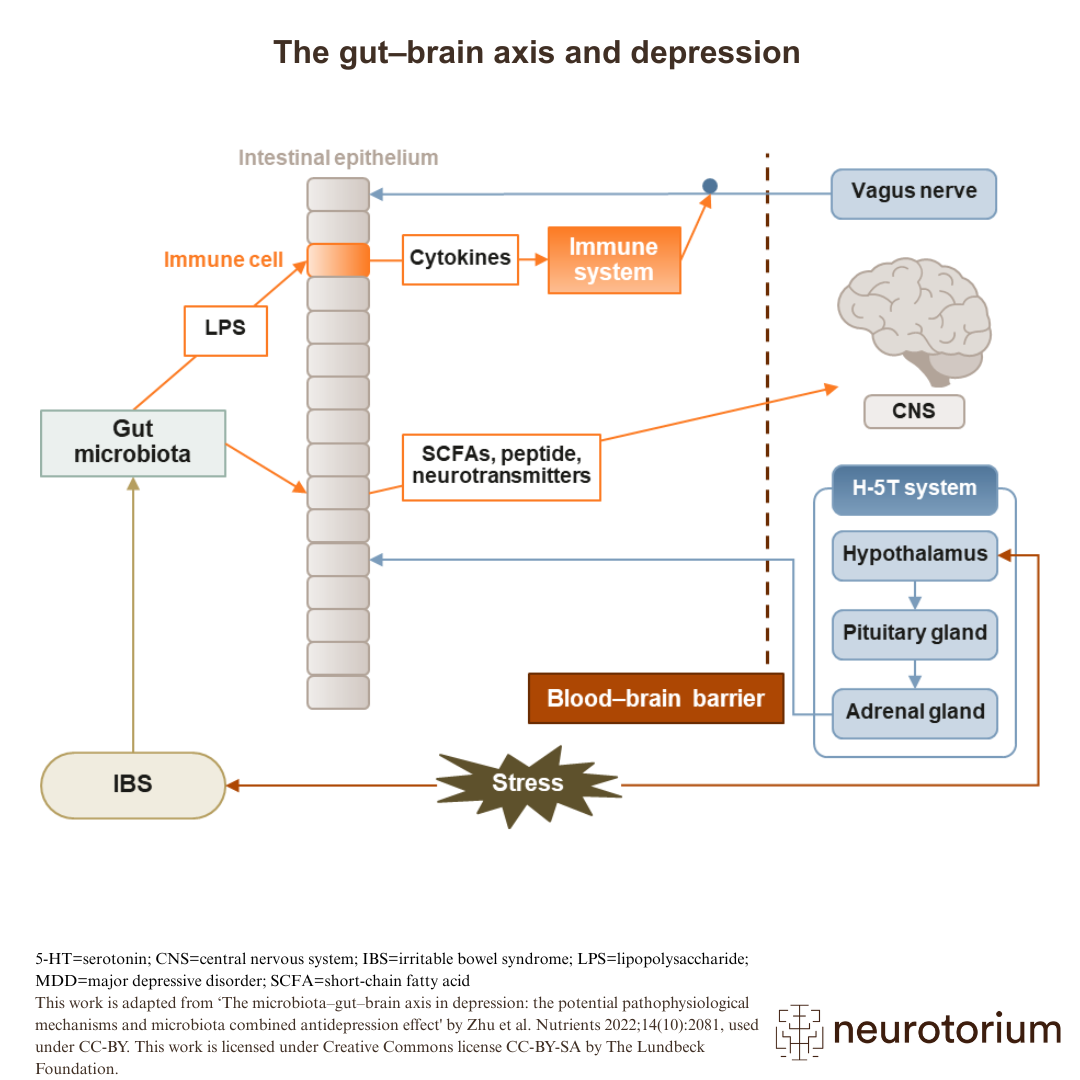
The bidirectional relationship between the gut microbiota and the brain has been implicated in many different diseases, including mood disorders and MDD.1 Bacteria in the gut can modulate inflammatory pathways (also implicated in depression), and can produce metabolites that then interact with the biochemistry of the body (e.g., butyrate).1
Analyses of the gut flora of people with depression have shown that there are differences in composition compared with control populations, including:2
- Higher levels of Alistipes and Parabacteroides species
- Lower levels of Prevotella species
Whilst it is known to be a factor in MDD, treatments that modulate or correct the molecular mechanisms that the gut flora disrupt in people with depression are still being researched2,3
MDD=major depressive disorder
Related content
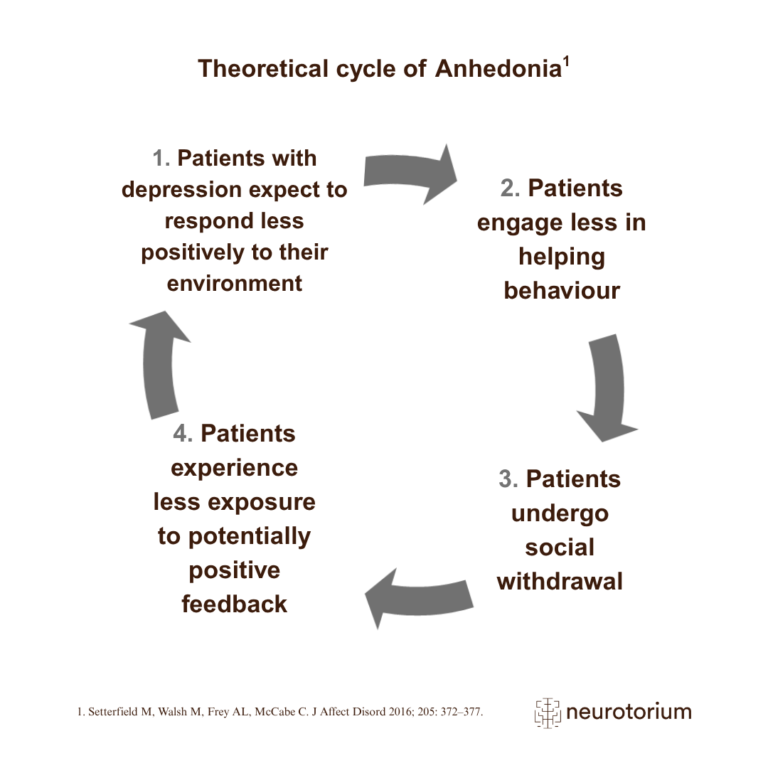
One hypothesis of the cycle of anhedonia (loss of interest or pleasure) in patients with depression is illustrated in this image; this hypothesis comes from a series of experiments performed on a sample of psychology students.
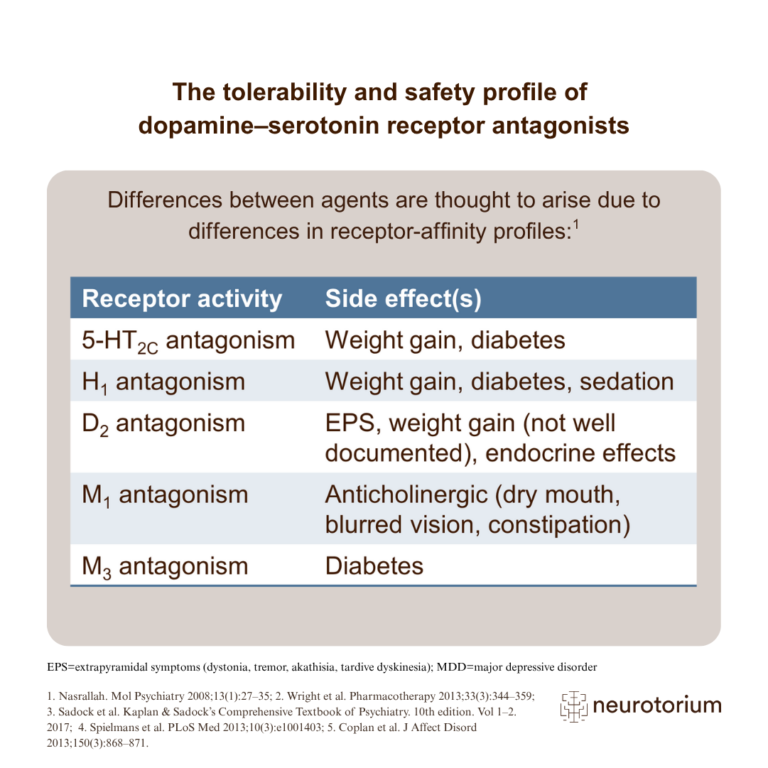
As adjunctive treatment in MDD, some dopamine–serotonin receptor antagonists are associated with sedating side effects, while others are more often associated with ‘activating’ side effects.