


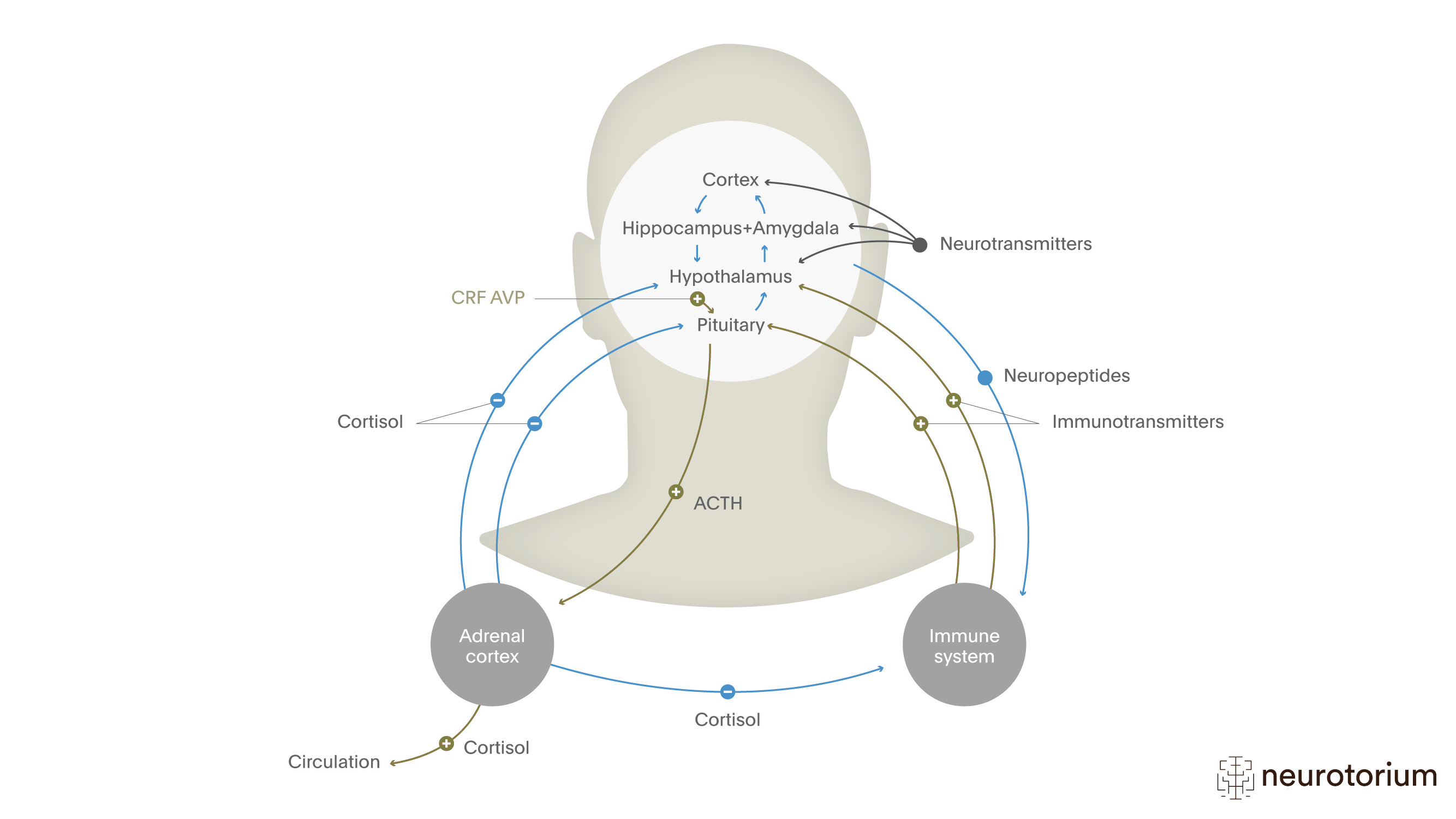
The hypothalamic-pituitary-adrenal (HPA) axis is a feedback loop that includes the hypothalamus, the pituitary and the adrenal glands. The main hormones that activate the HPA axis are corticotropin-releasing factor (CRF), arginine vasopressin (AVP) and adrenocorticotropin hormone (ACTH). The loop is completed by the negative feedback of cortisol on the hypothalamus and pituitary. The simultaneous release of cortisol into the circulation has a number of effects, including elevation of blood glucose for increased metabolic demand. Cortisol also negatively affects the immune system and prevents the release of immunotransmitters. Interference from other brain regions (eg. hippocampus and amygdala) can also modify the HPA axis, as can neuropeptides and neurotransmitters.
Related content
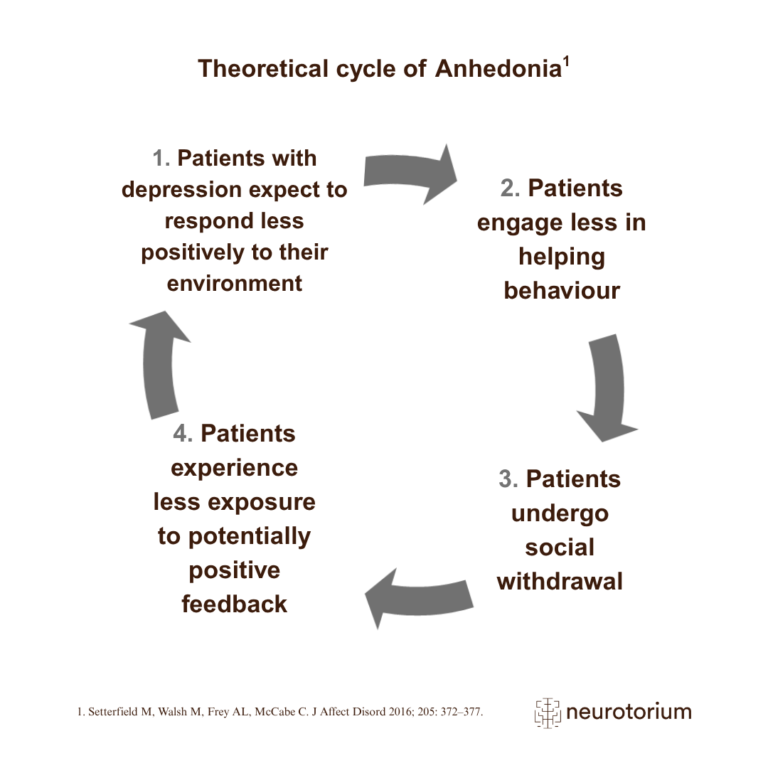
One hypothesis of the cycle of anhedonia (loss of interest or pleasure) in patients with depression is illustrated in this image; this hypothesis comes from a series of experiments performed on a sample of psychology students.
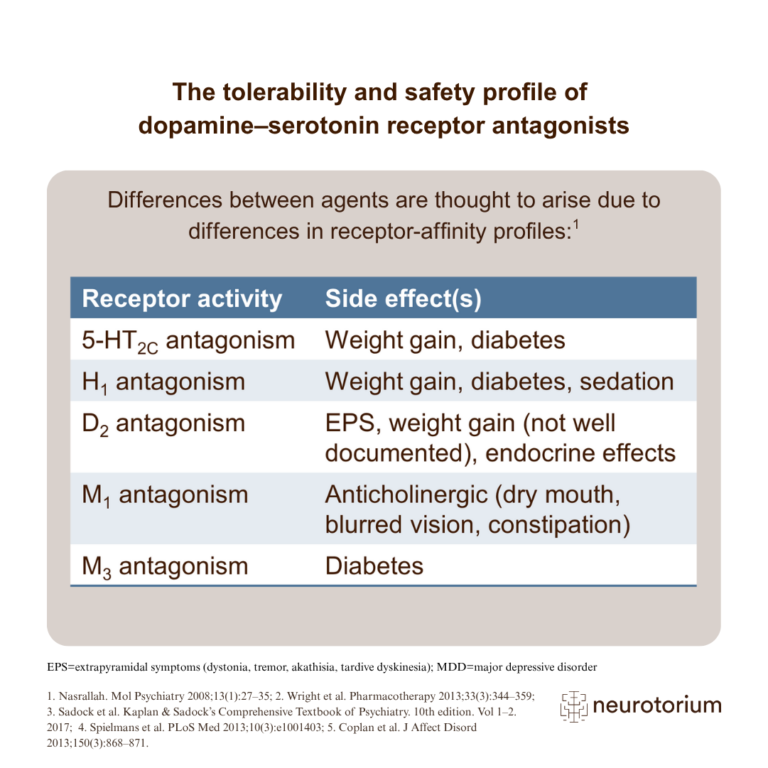
As adjunctive treatment in MDD, some dopamine–serotonin receptor antagonists are associated with sedating side effects, while others are more often associated with ‘activating’ side effects.