

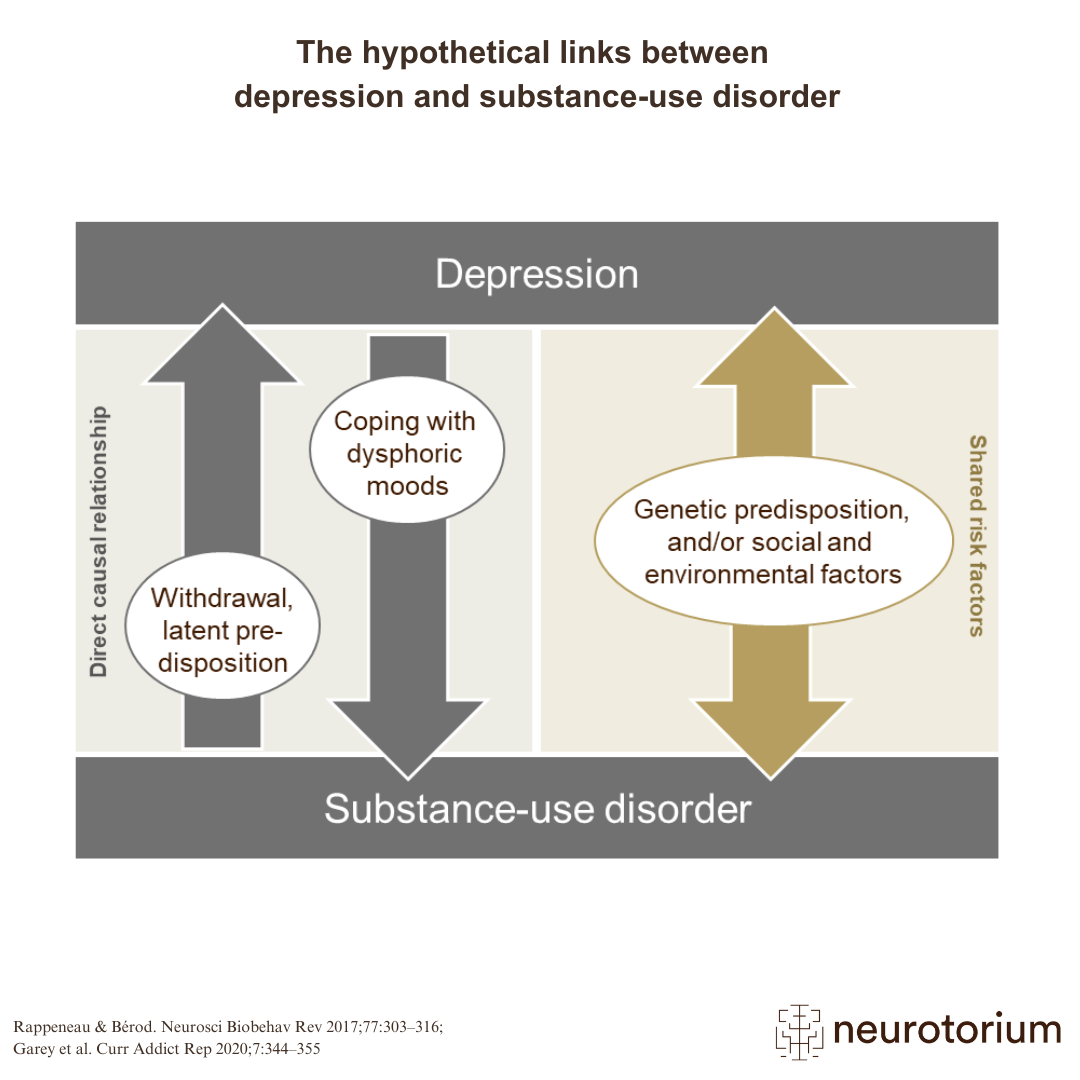
Several lines of evidence have shown that patients with depression have higher rates of substance-use disorders than the general population1,2
The presence of a major depressive episode increases the risk of drug dependence by 4.3 times,3 however, the relationship between substance-use disorder and MDD is bidirectional4
One meta-analysis, including 48 studies and 348,550 people, found a prevalence of substance-use disorder in men with MDD of 36%, and in women of 19%5
In an analysis of the STAR*D study data, patients with MDD and comorbid substance-use disorder were more likely to:6 6
- Have earlier onset of depression
- Experience greater depressive symptomatology
- Experience greater functional impairment
- Have a greater suicide risk
MDD=major depressive disorder; STAR*D=Sequenced Treatment Alternatives to Relieve Depression
Related content
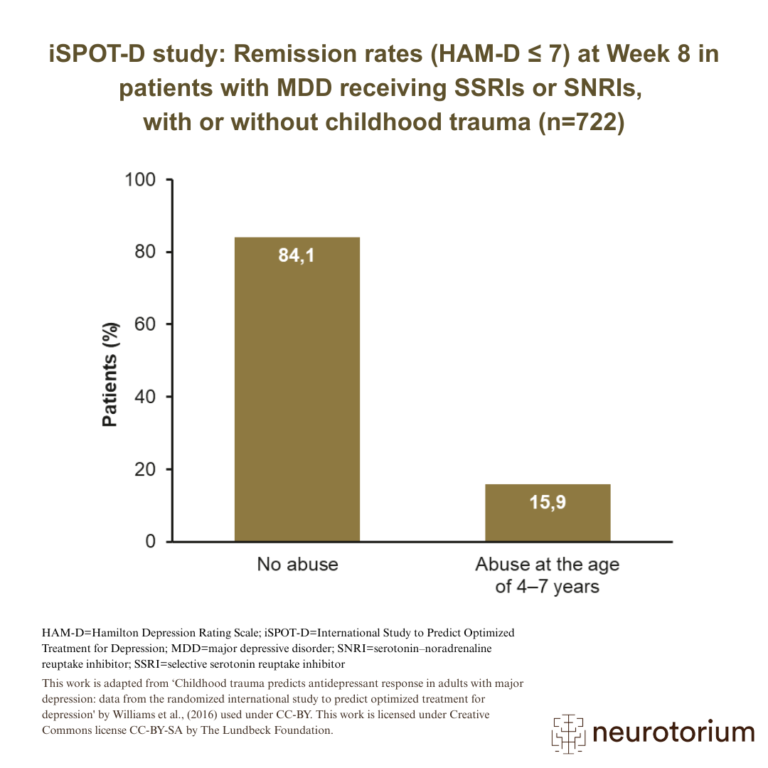
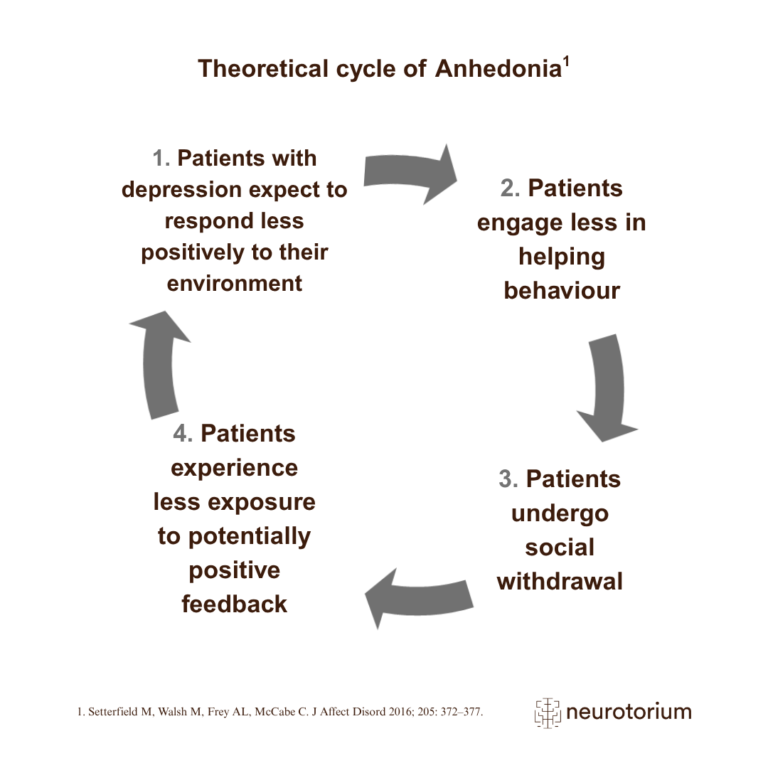
One hypothesis of the cycle of anhedonia (loss of interest or pleasure) in patients with depression is illustrated in this image; this hypothesis comes from a series of experiments performed on a sample of psychology students.
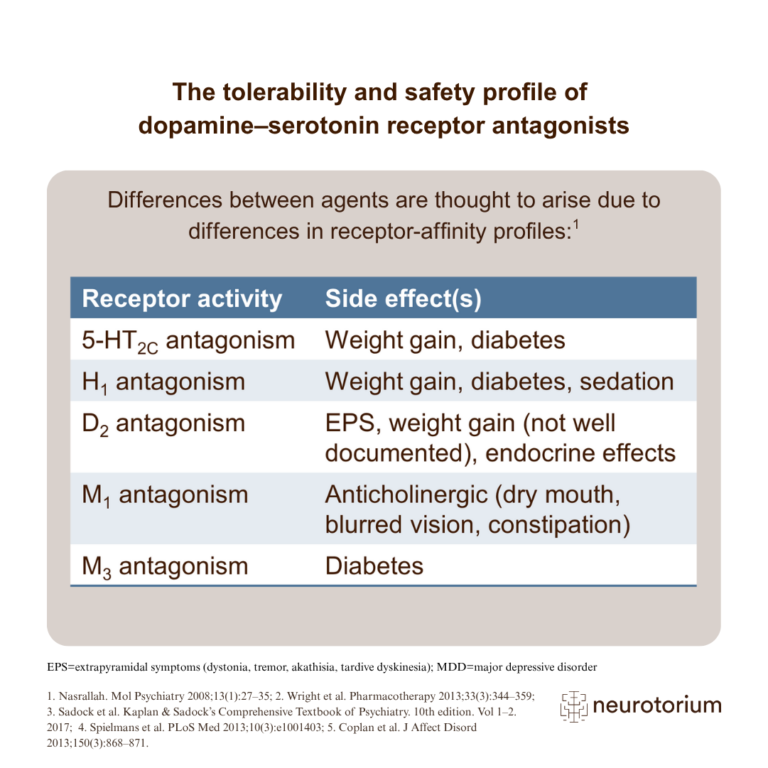
As adjunctive treatment in MDD, some dopamine–serotonin receptor antagonists are associated with sedating side effects, while others are more often associated with ‘activating’ side effects.