

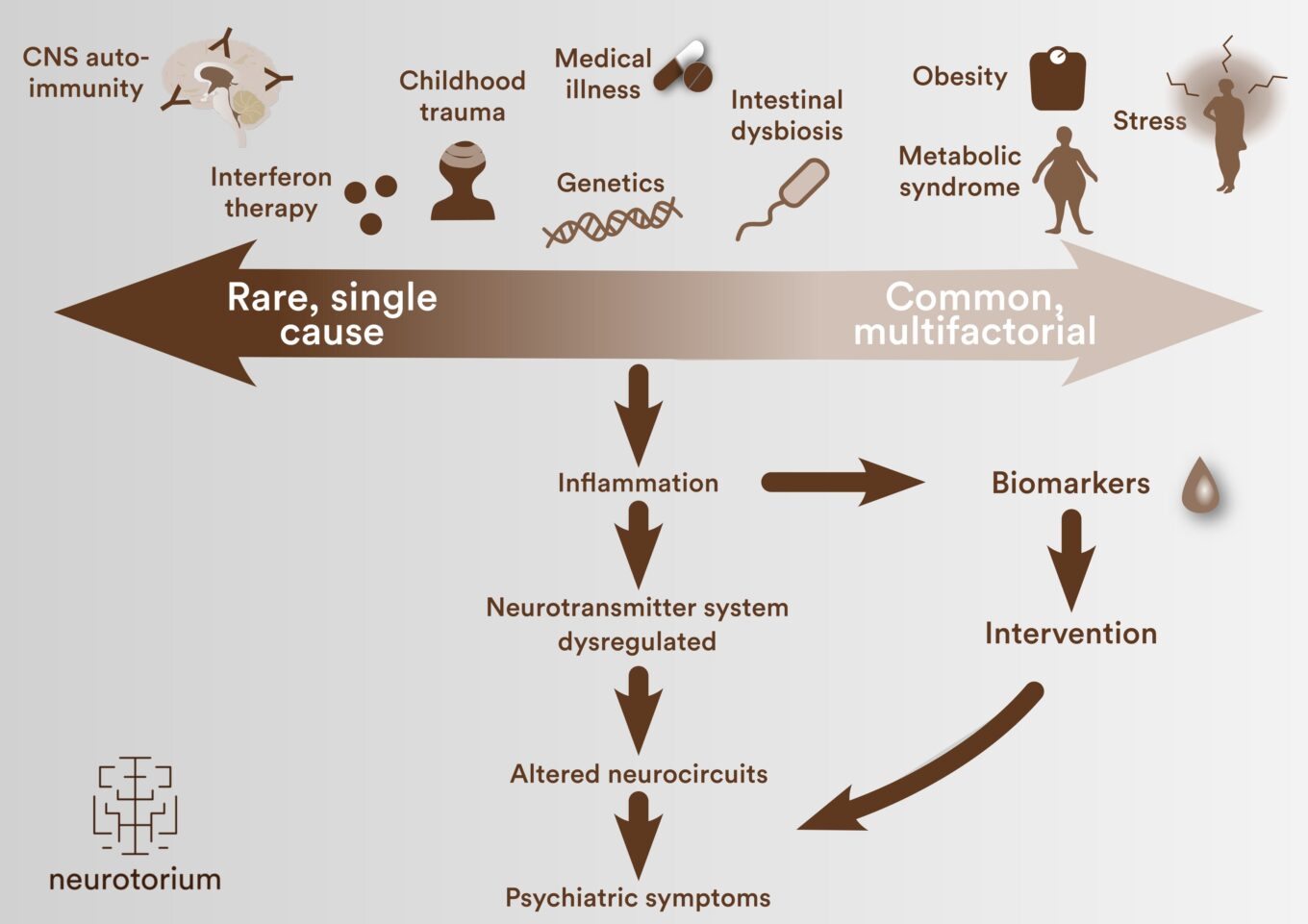
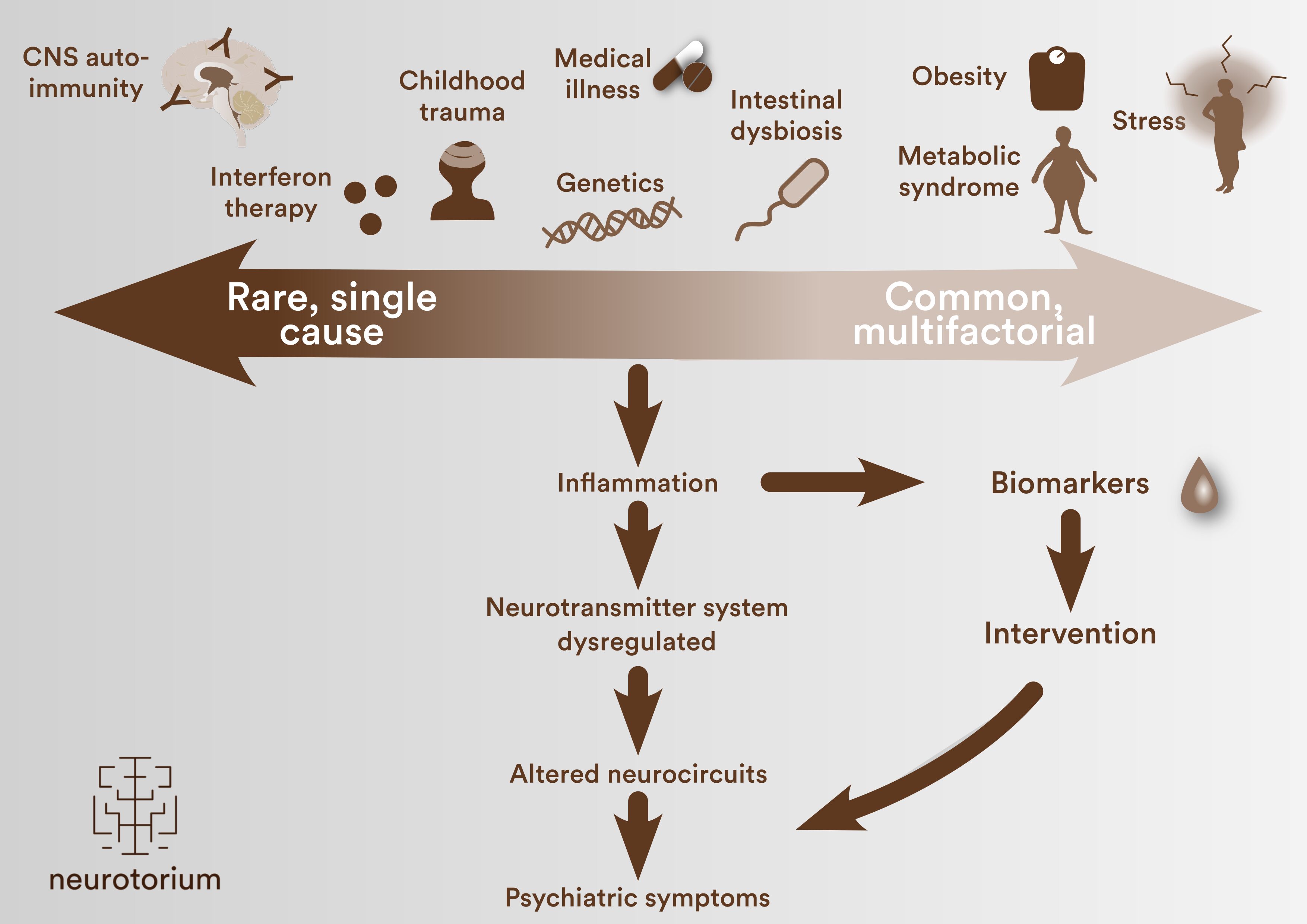
On the continuum of immune-mediated mechanisms contributing to psychiatric symptoms, the relative contribution of immune activation differs across patient groups. At one end (left), rare single-cause processes such as interferon therapy-induced neuropsychiatric effects (e.g. in hepatitis C treatment) act as direct triggers. At the other end (right), common and often multifactorial factors, including obesity, metabolic syndrome, stress and genetic vulnerability, indirectly promote immune dysregulation. Regardless of the initiating cause, inflammation can lead to neurotransmitter system dysregulation and altered neurocircuits, resulting in psychiatric symptoms. Biomarker assessments can help identify these immune-mediated processes and inform targeted intervention strategies.
Related content
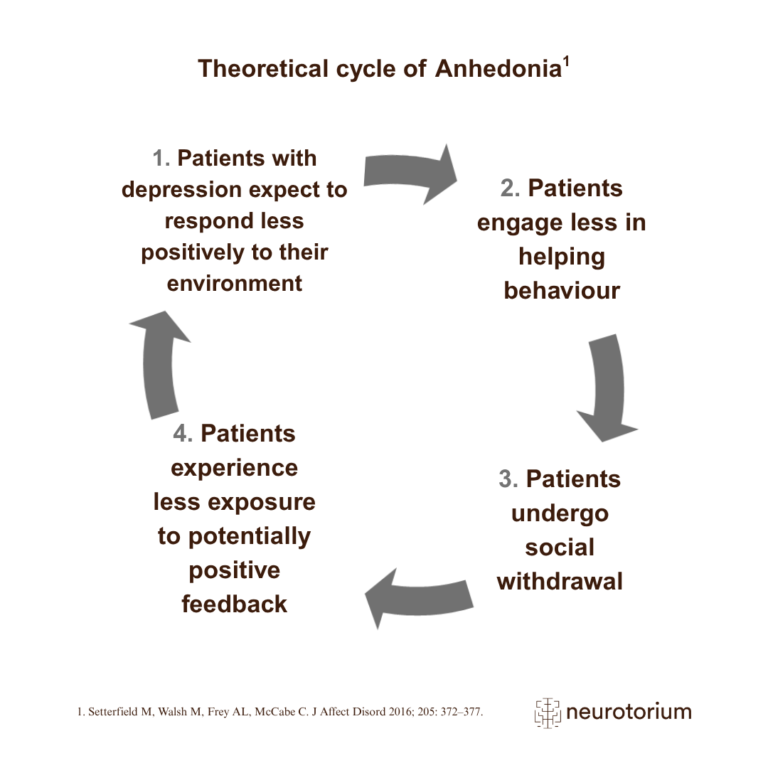
One hypothesis of the cycle of anhedonia (loss of interest or pleasure) in patients with depression is illustrated in this image; this hypothesis comes from a series of experiments performed on a sample of psychology students.
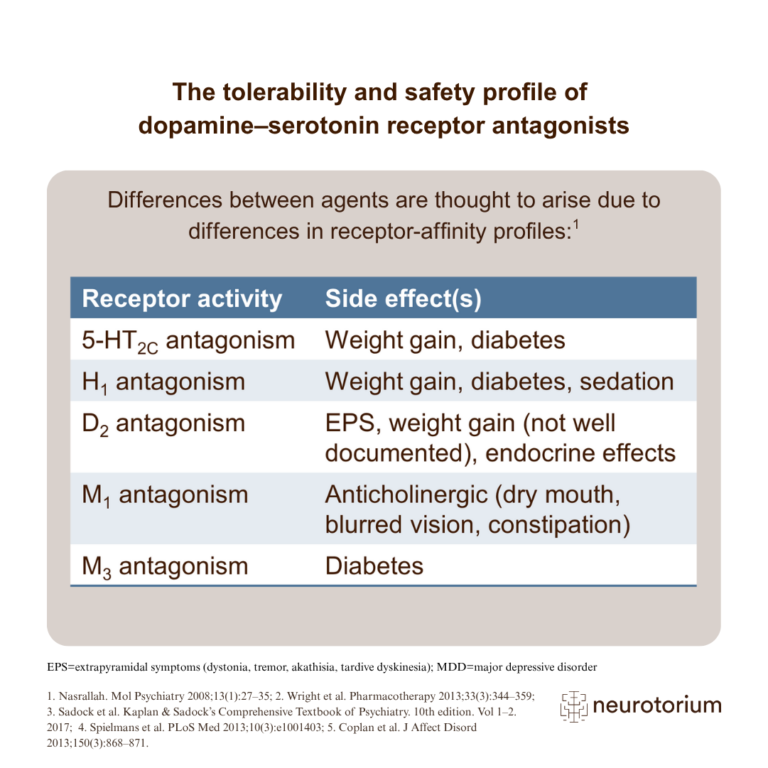
As adjunctive treatment in MDD, some dopamine–serotonin receptor antagonists are associated with sedating side effects, while others are more often associated with ‘activating’ side effects.