


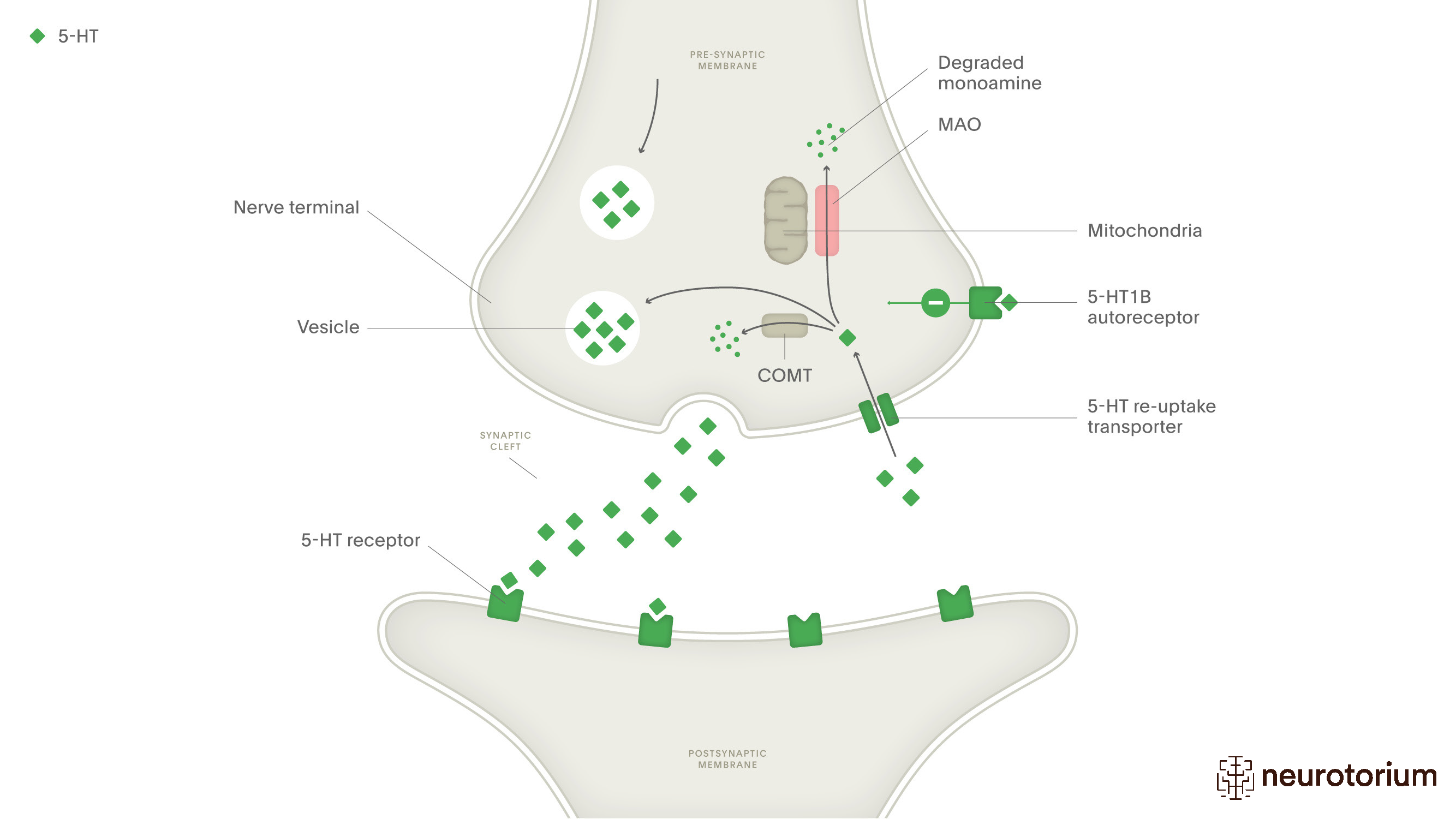
When a nerve impulse arrives at a serotonin (5-HT) nerve terminal, 5-HT is released from synaptic vesicles into the synaptic cleft. 5-HT molecules bind to their receptors on the post-synaptic membrane and the nerve impulse is propagated or inhibited, depending on the specific receptor. 5-HT molecules are then released from the receptors and taken back into the nerve terminal via the 5-HT re-uptake transporter. 5-HT is degraded by monoamine oxidase (MAO) and catechol-O-methyltransferase (COMT).
Related content
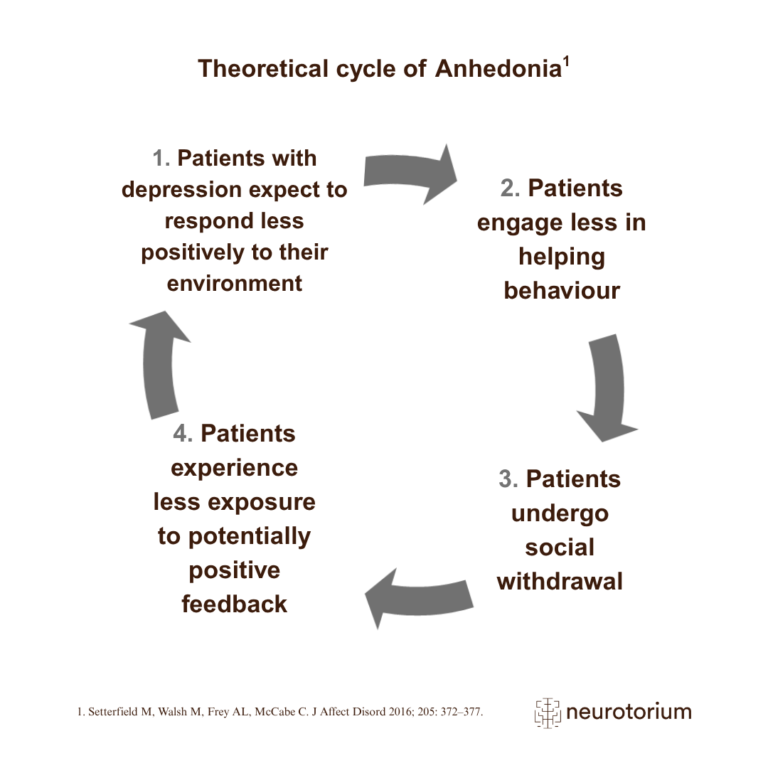
One hypothesis of the cycle of anhedonia (loss of interest or pleasure) in patients with depression is illustrated in this image; this hypothesis comes from a series of experiments performed on a sample of psychology students.
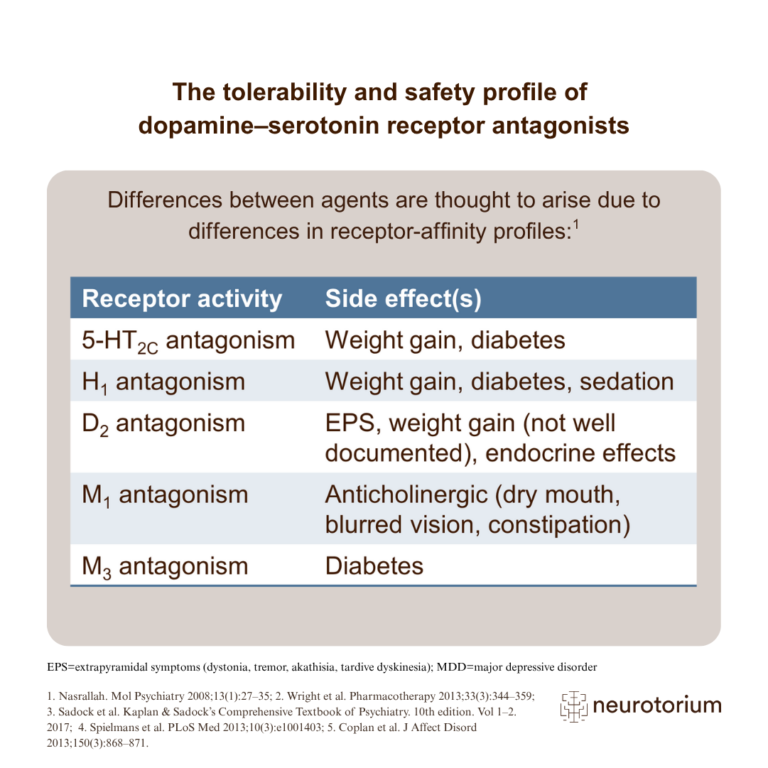
As adjunctive treatment in MDD, some dopamine–serotonin receptor antagonists are associated with sedating side effects, while others are more often associated with ‘activating’ side effects.